







Why Senior Cats Need Extra Attention to Hydration
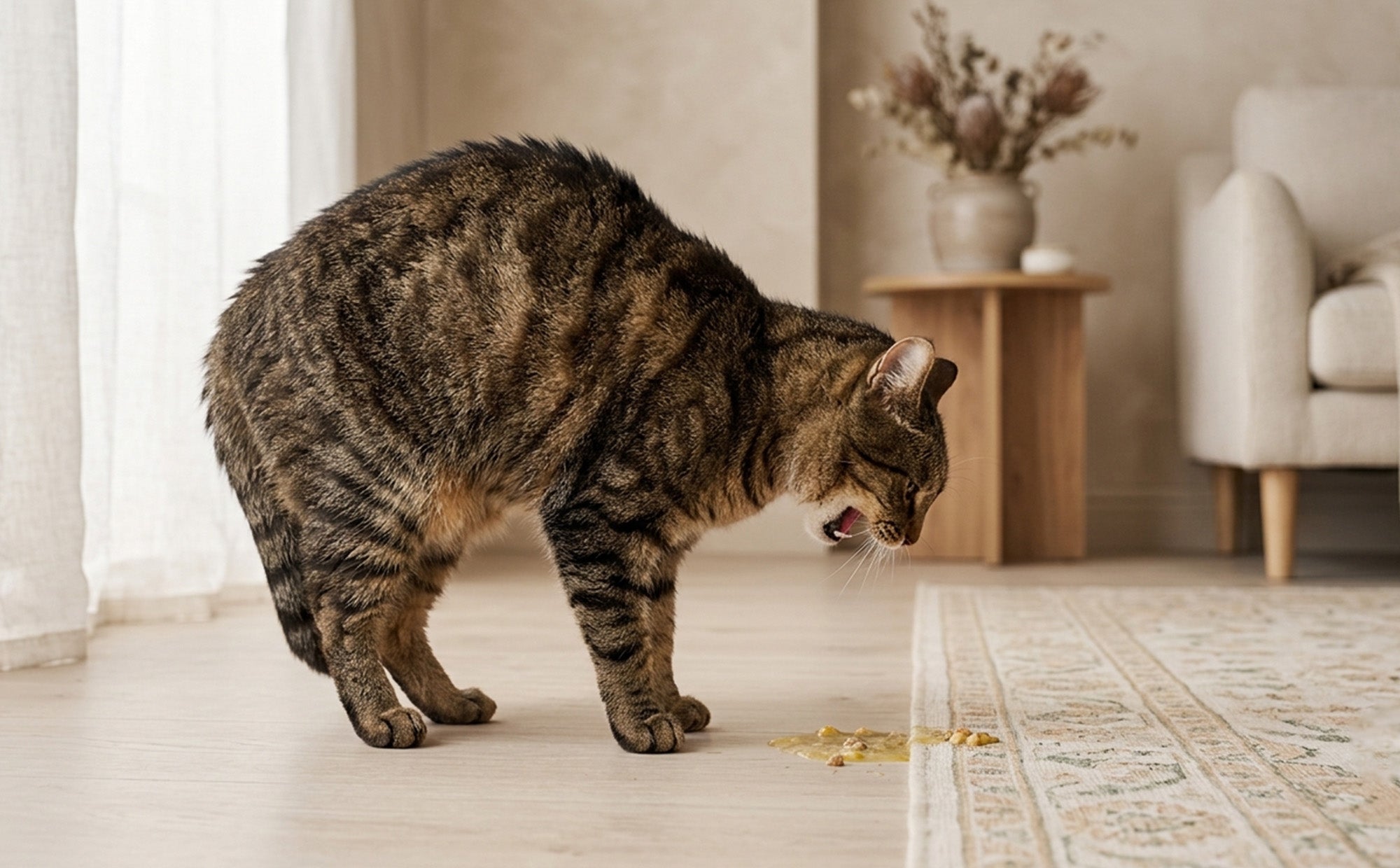
- Kidney function declines with age. Chronic kidney disease (CKD) is one of the most common conditions in older cats. Research published in the Journal of Feline Medicine and Surgery found that CKD affects roughly 30–40% of cats over age 10, while as many as 80% of cats aged 15 and older show some degree of kidney impairment. Cornell University's College of Veterinary Medicine notes that maintaining fluid balance is critical for cats with CKD because dehydration accelerates kidney damage and worsens clinical symptoms.
- Thirst perception weakens. Older cats often drink less than they need because their ability to sense thirst becomes less reliable. As a result, a senior cat may become mildly dehydrated without showing obvious signs, which makes gentle encouragement to drink especially important at this stage of life.
- Mobility also decreases with age. Arthritis and joint stiffness are common in older cats, and a fountain with a high rim or narrow opening may discourage a cat from drinking comfortably.
- Immune function weakens with age, making senior cats more vulnerable to bacterial infection. As resistance declines, water hygiene — including limiting bacterial growth inside the fountain itself — becomes increasingly important.
ISFM (International Society of Feline Medicine) guidelines on CKD management recommend offering multiple fresh water sources throughout the home and note that many cats prefer moving water, which may meaningfully increase daily fluid intake.
5 Features That Matter Most for Senior Cats
1.Drinking Accessibility
This is one of the most commonly overlooked factors in fountain design. A bowl that is too tall, an opening that is too narrow, or a design that forces a cat to crane its neck at an uncomfortable angle can be enough to keep an arthritic cat from drinking comfortably.
What to look for: a wide, shallow drinking tray that allows a cat to extend its neck naturally without hunching or brushing its whiskers against the rim. A flat, open-tray design is generally easier for senior cats to use than a tall, pedestal-style fountain because the water is positioned at a more comfortable height.
2.Quiet Operation
3.Hygiene and Bacterial Control
4.Continuous Availability and Monitoring
5.Low-Maintenance Design
Two PETKIT Fountains Worth Considering for Senior Cats
With those principles in mind, here is how two specific PETKIT models align with them in practice. Each one suits a slightly different household situation.
PETKIT EverSweet Ultra
Best for: senior cats in multi-pet households, or owners who want AI-assisted health monitoring.
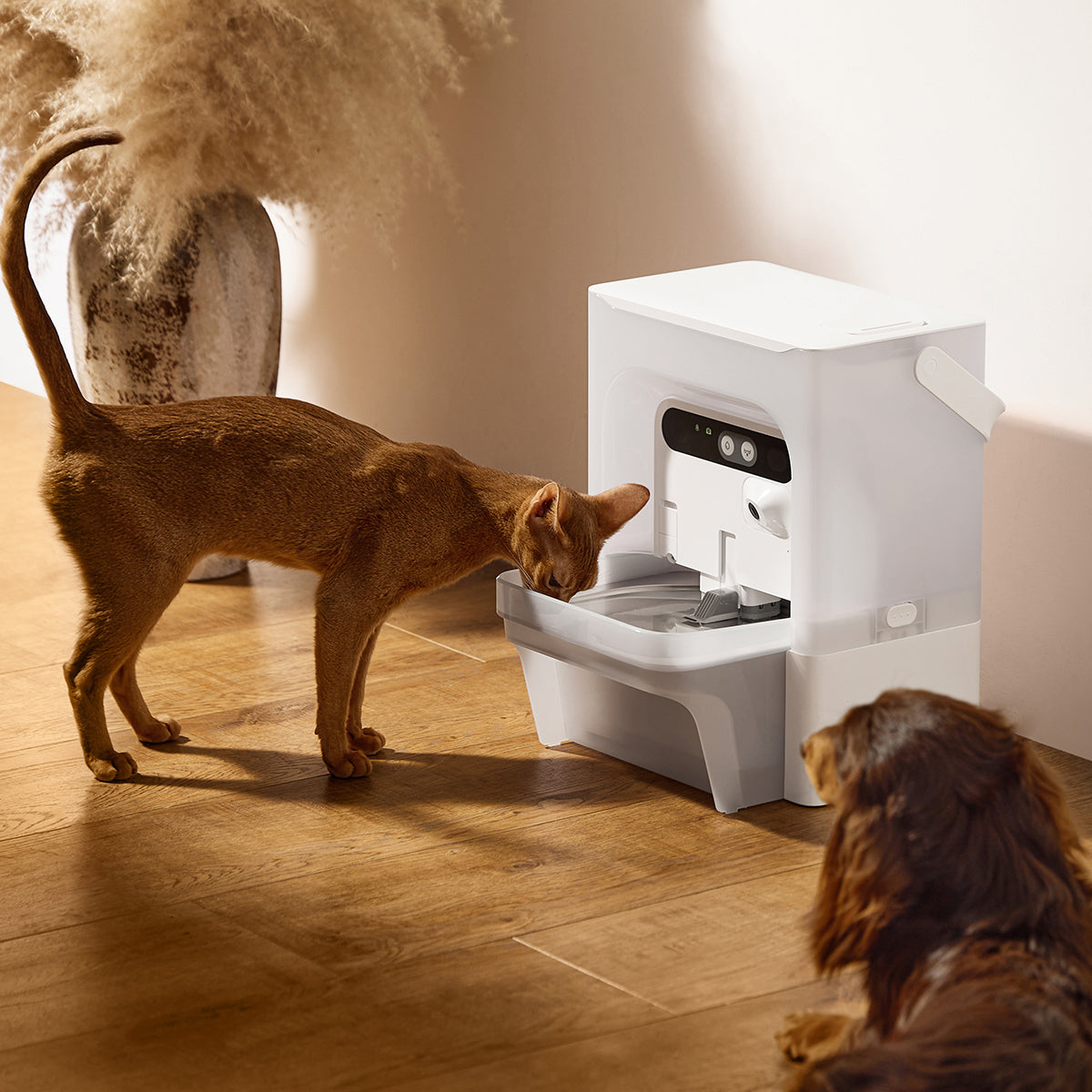
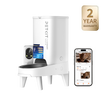
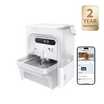
The EverSweet Ultra is built around a OneWay mechanism, a clean water and waste water separation system that sends clean water to the drinking tray while draining used water separately. In practice, this means the water a cat drinks is not stored in the same reservoir as water that has already been used. For owners prioritizing hygiene, that represents a meaningful departure from the design of a traditional recirculating fountain.
Its SpringFlow feature creates a soft, natural current that mimics a slow stream, the type of movement many cats instinctively prefer to still water. The flow remains quiet and low-profile, which may suit cats that are sensitive to noise or splashing.
A built-in AI camera allows the PETKIT app to track each pet's drinking patterns individually, including frequency, duration, and longer-term trends. For a senior cat being managed for kidney disease, urinary issues, or any condition in which hydration is part of the care plan, that information may help owners monitor changes over time and share useful observations with a veterinarian.
Key specs:
- Drinking tray: approximately 22.5 cm (8.9 in) wide
- Tray height: approximately 15 cm (5.9 in)
- Water system: OneWay Mechanism
- Capacity: 5 L (169 oz) clean water tank and 1.8 L (61 oz) wastewater tank
- Monitoring: AI camera with 24/7 individual pet tracking in the PETKIT app
- Noise level: ≤26dB (Noise increases during flush)
- Auto-refill: yes
- Warranty: 2 years
The EverSweet Ultra is likely to make the most sense for multi-pet households, since individual pet tracking — showing which cat drank, when, and for how long — provides a level of visibility that a shared fountain would not otherwise offer.
Third-party review: In an editorial review of smart pet products, CNET noted that the EverSweet Ultra includes nearly every feature PETKIT could fit into a single device, turning a basic fountain into a more fully featured system centered on a pet camera and AI detection. The review also cautioned that once a pet becomes accustomed to fresh running water, it may be less willing to drink from other sources.
Full review available via CNET.
PETKIT EverSweet Max 2 (UVC)
Best for: senior cats in single-cat or small households where hygiene is the top priority.
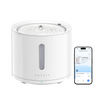
The EverSweet Max 2 (UVC) is designed to address bacterial control directly. Its cordless UVC pump provides continuous sterilization while the fountain is running, rather than operating on a fixed cycle, and it is paired with a triple-filtration system to help manage debris and odor within a standard recirculating design.
The drinking tray is made from 304 stainless steel, a non-porous material that is generally more resistant to biofilm buildup than plastic. For older cats with reduced immune function, that can be a meaningful advantage. The tray, water tank, and tubing are all dishwasher-safe and rated to withstand temperatures up to 212°F (100°C), making thorough cleaning easier without extensive manual scrubbing.
When fully charged, the fountain can operate cordlessly for up to 83 days, or it can be plugged in for continuous power. That flexibility allows owners to place it where a senior cat already rests or spends time, without needing to position it near an outlet. For a cat with limited mobility, easy placement may make the fountain more accessible and more likely to be used consistently.
The PETKIT app uses infrared sensing to track drinking frequency and duration, helping owners establish a baseline and notice changes over time. Three flow modes — continuous, intermittent, and motion-activated — also allow the water flow to be adjusted based on an individual cat’s preferences.
How to Choose an Automatic Water Fountain
The right choice depends on what matters most for your senior cat.
| Priority | EverSweet Ultra | EverSweet Max 2 (UVC) |
|---|---|---|
| Per-Pet Hydration Habits Tracking | AI camera | Sensor |
| Physical fresh/wastewater separation | OneWay mechanism | Standard recirculation |
| Continuous UVC sterilization | / | Cordless UVC pump, runs continuously |
| Filtration system | Not needed — waste water is already separated | Triple filtration system |
| Cordless placement flexibility | / | Up to 83 days battery |
| Multi-pet household suitability | Recognizes up to 15 pets individually | Best for 1–2 cats |
| Dishwasher-safe parts | the fountain outlet, the magnetic strainer, and the water tray | Tank, tray, lid, filter holder, and outlet pipe |
If your cat lives with other pets and you want to know exactly how much each one is drinking, the Ultra's per-pet AI tracking is the more targeted option. If you have one or two cats and place greater value on hygiene and flexible placement than on multi-pet monitoring, the Max 2 (UVC)'s continuous sterilization and cordless design may be the better fit.
Practical Tips for Getting a Senior Cat Used to a Fountain
Older cats tend to be creatures of habit, so introducing a fountain often takes patience, especially if a cat has been drinking from a bowl for years.
Put it where your cat already goes. Start by placing the fountain next to the bowl your cat currently uses. Do not remove the bowl immediately; let your cat explore the fountain at its own pace.
Run it before your cat approaches. Turn the fountain on ahead of time so the sound of running water becomes part of the environment rather than a sudden new stimulus when your cat gets close.
Keep the old bowl around for at least two weeks. Many senior cats need more time than younger cats to accept something new. Removing a familiar bowl too quickly may reduce overall water intake, which is the opposite of the goal.
Start with the quietest flow setting. If the fountain has multiple flow modes, begin with the lowest setting. A gentle trickle is usually easier for a hesitant cat to approach than a strong stream.
Watch for behavior changes. If a senior cat that previously drank regularly shows no interest in a new fountain, consider whether the flow speed, placement, or noise level may be the issue. Hesitation around a new object should not automatically be interpreted as reduced thirst.
Frequently Asked Questions
At what age should I switch to a fountain designed for senior cats?
Most veterinarians classify cats as senior starting at age 7. Even if your cat appears healthy, that is a reasonable stage at which to reassess the water setup. Kidney-related changes often begin years before visible symptoms appear, and it is generally easier to establish strong hydration habits early than to address dehydration later.
Can a fountain help a cat that's already been diagnosed with kidney disease?
A fountain can support hydration in a cat with CKD by making water more appealing and consistently available. Cornell University’s feline health resources and ISFM both note that providing multiple fresh water sources, including fountains, can be part of supportive care for CKD. However, a fountain is not a substitute for veterinary treatment or dietary management.
My senior cat has arthritis — which fountain design helps most?
A low, wide, flat drinking surface generally requires the least physical adjustment. It is best to avoid elevated or bowl-on-a-stand designs that require cats to stretch their neck downward.
How do I know if my cat is drinking enough water from a fountain?
Cats generally need about 40–60 ml of water per kilogram of body weight per day, although this varies with diet, since wet food provides substantially more moisture than dry food. Models like the PETKIT EverSweet Ultra (via Wi-Fi) or EverSweet Max 2 (UVC) (via Bluetooth) can track drinking frequency through the PETKIT app and help establish a baseline over time. If you notice a drop in frequency or duration over several days, or a change in litter box output, it is worth checking with your veterinarian.
How often should I clean a fountain used by a senior cat?
More often than you might for a younger, healthy cat. A full weekly cleaning and a monthly deep clean is a reasonable baseline. For a senior cat with reduced immune function or an active health condition, cleaning every 5–7 days may be more appropriate. Dishwasher-safe components can make that routine easier to maintain.