












Cats are remarkably good at hiding problems, and dehydration is no exception. By the time most owners notice something is off, their cat may already be moderately dehydrated. Knowing the early warning signs, how to perform two simple checks at home, and when a situation calls for a vet visit can make a meaningful difference in the outcome.
This guide covers what cat dehydration actually looks like, how to perform two simple at-home checks, what typically causes it, and how consistent access to fresh water helps prevent it in the first place.
How Dehydration Affects Cats' Health
Water makes up roughly 60–70% of a cat's body weight and plays a role in nearly every physiological process: regulating body temperature, supporting kidney function, aiding digestion, and carrying nutrients and waste through the bloodstream. When a cat loses more fluid than it takes in, the body starts to compensate, and those compensatory responses are what produce the symptoms an owner can actually notice.
Dehydration is generally classified by severity:
| Severity | Estimated Fluid Loss | What You Might Notice |
|---|---|---|
| Mild | Under 5% of body weight | Subtle behavior changes; increased thirst; minor gum changes |
| Moderate | 5–8% of body weight | Dry or tacky gums; delayed skin recoil; reduced urination; lethargy |
| Severe | Over 8–10% of body weight | Sunken eyes; rapid heart rate; extreme weakness; needs immediate veterinary care |
Mild and moderate dehydration can develop over hours to days without a cat showing obvious discomfort, which is exactly why early detection matters so much.
Why Cats Are Prone to Dehydration
Cats evolved as desert-adapted hunters. Historically, their main water source came from prey, since raw meat is roughly 70–80% water. As a result, cats developed a relatively weak thirst drive — unlike dogs or humans, they don't tend to actively seek out water before dehydration has already started to set in.
In a modern household, that creates a few ongoing challenges.
Dry food provides very little moisture. A typical dry kibble diet is only about 10% water, compared to 70–80% in wet food. A cat that eats only dry food has to actively drink more to make up the difference.
Still water in a bowl often isn't appealing. Instinctively, cats associate standing water with potential contamination and moving water with freshness.
A sedentary indoor lifestyle reduces obvious thirst cues, which doesn't cause dehydration on its own but makes it harder for a cat (or its owner) to notice when intake has quietly dropped.
The net effect is that chronic, low-level dehydration is fairly common in cats, particularly those eating a dry-food-only diet.
7 Signs of Dehydration in Cats
1. Dry or tacky gums. A well-hydrated cat's gums should feel moist and slick, similar to the inside of a human mouth. Running a finger lightly across the gum surface should meet no resistance or stickiness. Dry, tacky, or slightly sticky gums that catch on your finger are one of the earliest detectable signs of dehydration. Pale or white gums can also point to other serious conditions, including anemia, and should always be evaluated by a vet.
2. Slow capillary refill time. Gently press on your cat's gums until the area blanches white, then release. In a well-hydrated cat, pink color should return within 1–2 seconds as blood flows back in. In a dehydrated cat, the area stays pale or takes noticeably longer to return to pink. Veterinarians refer to this as capillary refill time (CRT), and a slow CRT is a recognized indicator of dehydration.
3. Reduced skin elasticity (the skin tent test). This is one of the fastest ways to assess hydration status at home. Gently pinch a small fold of skin at the back of the neck or between the shoulder blades, lift it slightly, and release. In a well-hydrated cat, the skin should snap back almost instantly. In a dehydrated cat, the skin loses elasticity and stays “tented” for 1–2 seconds before flattening out, or sometimes longer.
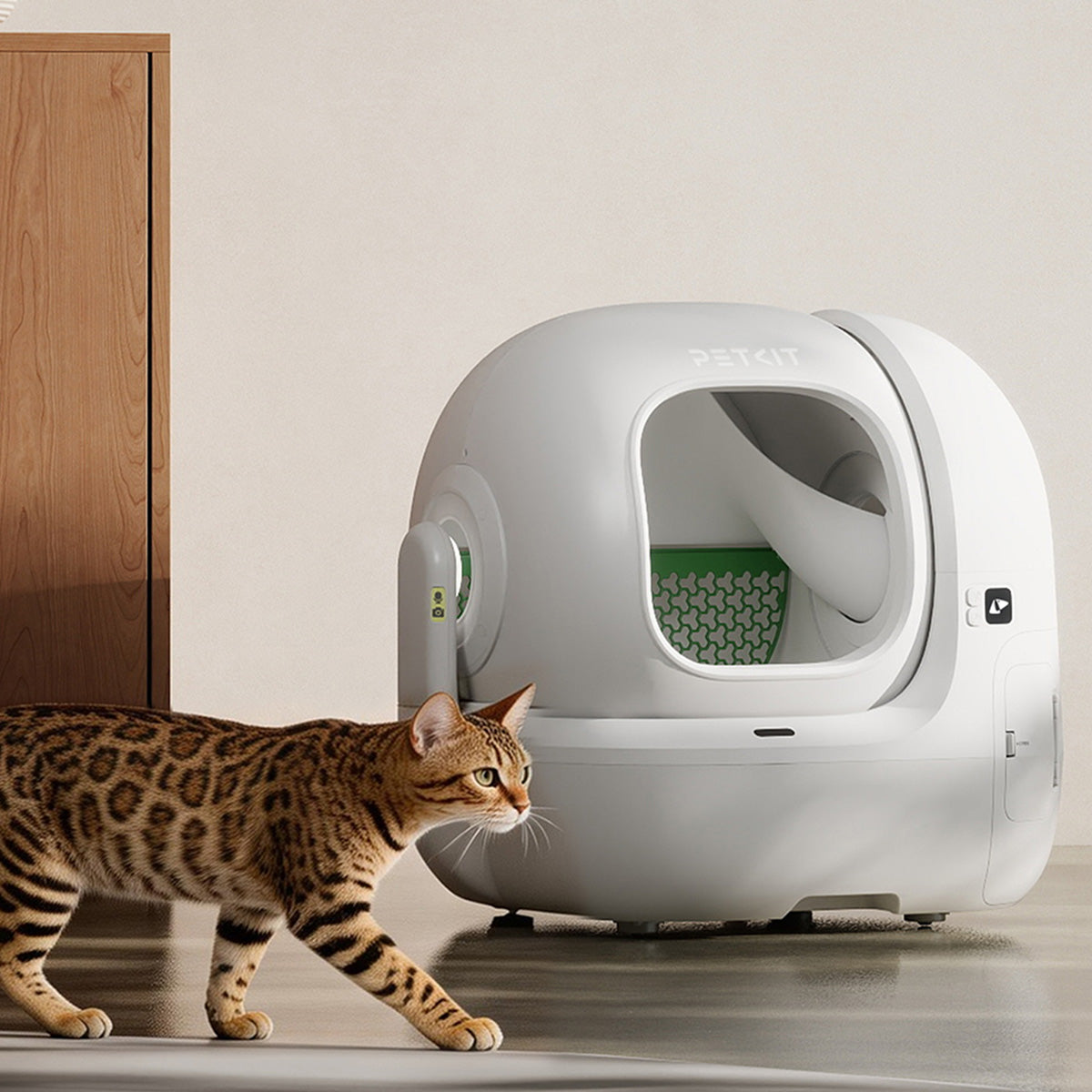
4. Changes in litter box output. A change in litter box habits, such as noticeably less frequent urination, can be a sign of dehydration. Urine should be dilute and pale yellow, and should appear in the litter box at least a few times a day. Dark yellow urine, straining to urinate, or going several hours without urinating all warrant attention. Concentrated, dark urine means the kidneys are conserving water, which is the body’s response to not getting enough fluid intake.
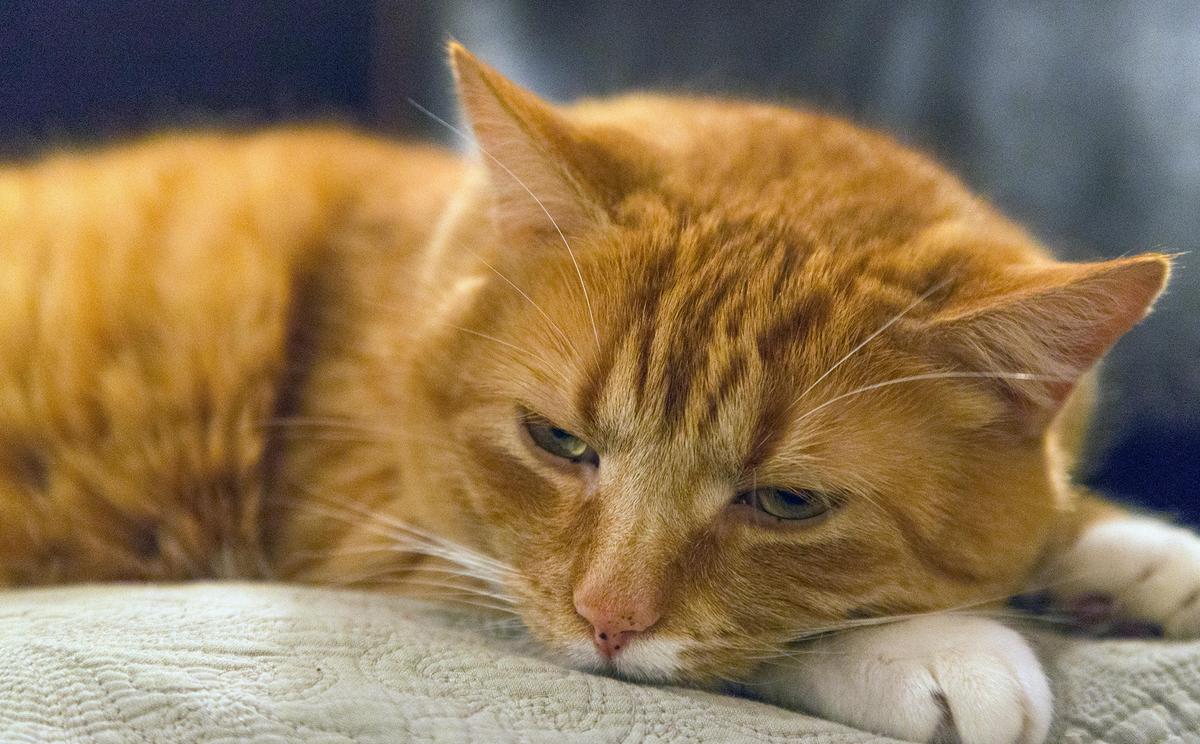
5. Lethargy and reduced activity. A dehydrated cat often becomes quieter, less playful, and slower to respond to stimuli. This sign is easy to write off as mood or normal day-to-day variation, which is exactly why it’s more useful when considered alongside other signs rather than on its own. If your cat is sleeping more than usual, seems less interested in its surroundings, or is generally less responsive—and you’re also seeing any of the other signs on this list—dehydration is a reasonable thing to suspect.
6. Sunken or dull-looking eyes. Sunken eyes can indicate moderate to severe dehydration. This is a later-stage sign, meaning significant dehydration is likely already present by the time it shows up. Affected cats may also keep their eyes partially closed or have a dull, glassy appearance.
7. Reduced appetite and a dry coat. Dehydration often comes with a drop in appetite. A cat that isn’t eating or drinking continues to lose fluid through normal bodily functions without replacing it, and that combination accelerates the progression from mild to moderate dehydration. A dull, dry, or unkempt-looking coat can also point to chronic, low-level dehydration, since the body reallocates resources away from non-essential functions like coat maintenance when fluid is limited.
How to Perform Two At-Home Checks
Gum Check
1. Get your cat into a relaxed, seated position.
2. Gently lift the upper lip to expose the gums above the front teeth.
3. Check the color. It should be pink, not pale or white.
4. Run a finger lightly across the gum surface. It should feel moist and slick, not dry or tacky.
5. Press gently on the gum until the color blanches, then release.
6. Count how quickly the color returns. It should be within 2 seconds.
Skin Tent Test
1. Locate the skin at the back of the neck or between the shoulder blades.
2. Gently pinch a small fold of skin between your thumb and index finger.
3. Lift it about half an inch to an inch (1.5–2.5 cm), then release.
4. Watch whether the skin flattens out immediately (normal) or stays tented and recoils slowly (a possible sign of dehydration).
Common Causes of Dehydration in Cats
Understanding what causes dehydration helps you address it appropriately. The most common cause is an underlying illness that increases fluid loss — chronic kidney disease, diabetes, vomiting, diarrhea, and hyperthyroidism all fall into this category. Increased fluid loss can also be caused by certain medications, including diuretics commonly used to treat heart conditions. Cats may also drink less due to weakness or lethargy, reduced appetite, dental problems, lack of accessible water sources, or territorial tension with other cats in the household.
Situational causes include hot weather or a warm indoor environment, which increases fluid loss through respiration; going too long without access to fresh water, since stale or warm water is often rejected; stress or a disrupted routine, which can lead some cats to drink less; and recovery from surgery or illness, where reduced activity and appetite both affect hydration.
If your cat is a senior — 7 years or older — the risk of dehydration tends to be higher, since age-related changes like a weaker thirst drive and a natural decline in kidney function compound the issue. These mechanisms are covered in more detail in How to Choose an Automatic Water Fountain for Senior Cats.
Does Running Water Really Make Cats Drink More?
Cats do show a fairly well-established behavioral preference for moving water over still water — this is broadly accepted in feline behavior research, and the likely explanation is that moving water is evolutionarily associated with a fresher, less contaminated source.
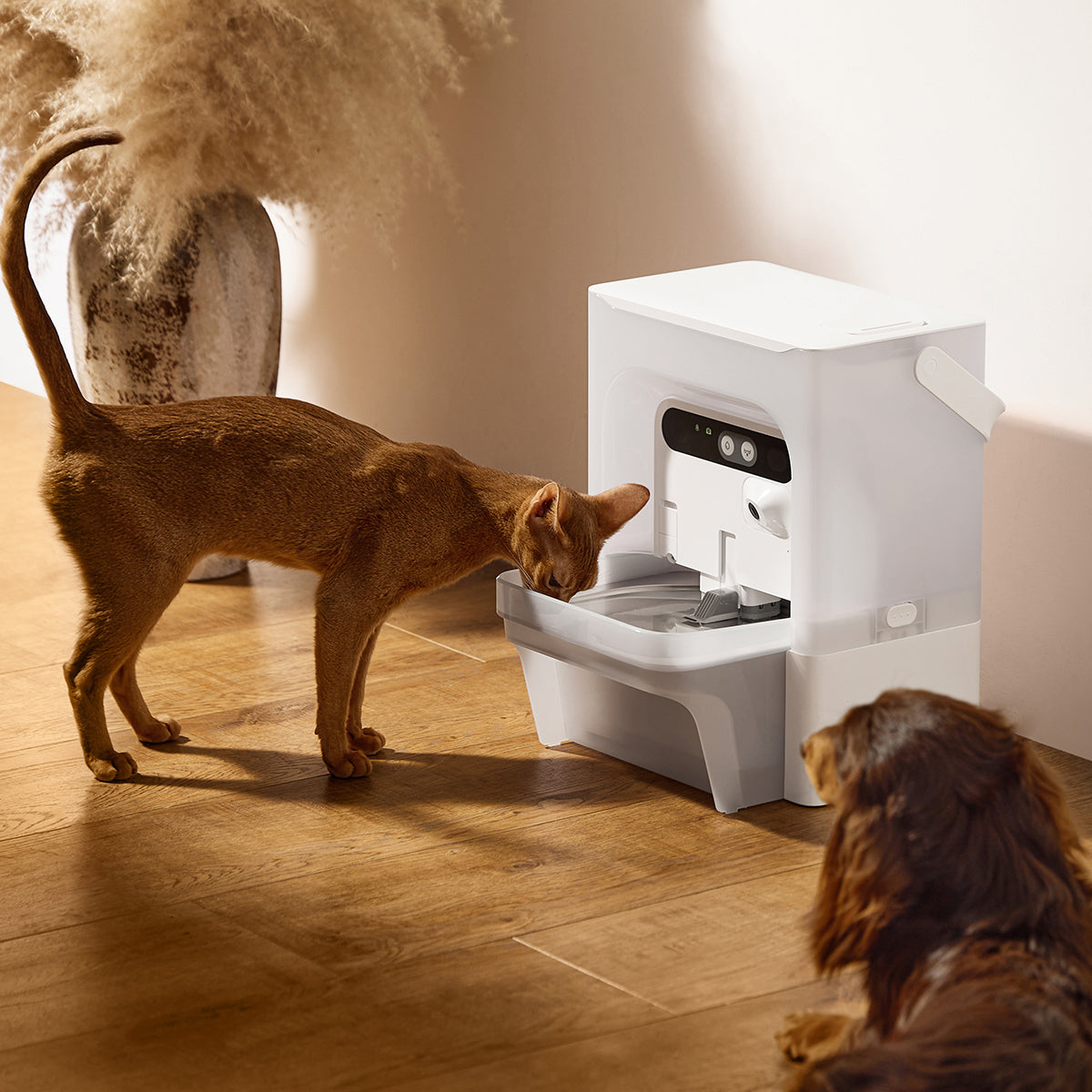
If you decide to use a fountain, whether it actually works long-term comes down to the fountain's design and how well it's maintained. Biofilm — the thin layer of bacteria that builds up on a fountain's surfaces over time — reduces palatability and can cause a cat to start avoiding the fountain altogether. This matters more than it might seem: a cat's natural preference for moving water can easily be outweighed by the unpleasant experience of dirty water. A few design factors tend to support consistent use over time:
- Hygiene. Fountains with active sterilization (UVC, for example) or a OneWay Mechanism (clean and waste water separation) tend to keep water fresher between cleanings than a standard recirculating design. The PETKIT EverSweet Ultra's OneWay mechanism separates fresh water from used water before it reaches the drinking tray. The PETKIT EverSweet Max 2 (UVC) runs a built-in UVC sterilization light continuously to inhibit bacterial growth.
- Non-porous surfaces. Stainless steel drinking trays resist biofilm buildup better than plastic, which is porous at a microscopic level. Both the PETKIT EverSweet Ultra and the PETKIT EverSweet Max 2 (UVC) use 304 stainless steel drinking trays, which helps keep bacterial growth down and water cleaner for longer.
- Consistent availability. A fountain that runs reliably and maintains water level without constant manual intervention means your cat has access to fresh, appealing water at all times.
- App-based monitoring. Fountains connected to the PETKIT app record each drinking session, including frequency and duration, giving owners a detailed record of their cat’s drinking activity over time. Owners can review this information to see changes in drinking frequency or session duration across consecutive days.
For a closer look at how different fountain designs trade off hygiene, noise, and drinking height, see Which Is the Best Automatic Cat Water Fountain in 2026, which compares several models in more detail.
Frequently Asked Questions
How can I tell at home if my cat is dehydrated?
The two most reliable at-home checks are the gum test and the skin tent test. For the gum test: healthy gums should be pink and moist, with capillary refill time under 2 seconds after gentle pressure. For the skin test: gently pinch the skin at the back of the neck and release — in a well-hydrated cat, it should flatten immediately. A delay of more than 1–2 seconds suggests dehydration. If you notice both signs together, contact your vet.
Can a cat recover from dehydration on its own?
Mild dehydration in an otherwise healthy adult cat can often improve with fresh water and wet food. That said, dehydration is usually a symptom of an underlying issue — illness, heat, an unbalanced diet — rather than the root cause itself. If your cat doesn't show improvement within a few hours of having access to water, or if you're seeing moderate to severe signs, veterinary care is needed, and IV fluid therapy may be required to safely restore hydration.
My cat is drinking water but still seems dehydrated. What could cause that?
This pattern — drinking but still dehydrated — can point to an underlying condition that's causing fluid loss faster than the cat can replace it through normal drinking. Chronic kidney disease, diabetes, and hyperthyroidism can all cause the body to lose water faster than typical water intake can keep up with. This is an important distinction: a cat that's drinking a lot but still seems unwell needs bloodwork and a urinalysis, not just more water.
Does wet food prevent dehydration?
Wet food can meaningfully increase total fluid intake, since it's roughly 70–80% water compared to about 10% in dry food. For a cat that doesn't drink much on its own, wet food is one of the most effective ways to improve daily hydration. That said, wet food alone doesn't guarantee optimal hydration for every cat — additional water from a bowl or fountain still helps, particularly for cats that need higher fluid intake, such as those being managed for kidney disease.
How often should I change the water in my cat's fountain?
For a standard fountain, top off the water at least daily and do a full water change every 2–3 days. For cats with health conditions, or in hot environments, more frequent changes are advisable. The fountain's bowl and components should be cleaned weekly, with a thorough deep clean monthly. Fountains with continuous sterilization (UVC) or fresh/wastewater separation can extend the interval before bacterial buildup degrades water quality, but they don't eliminate the need for regular cleaning.
To learn more about feline hydration, see How Much Water Should a Cat Drink Daily, or explore PETKIT's smart fountain lineup, designed to encourage consistent drinking habits.