












Quick Answer:This article explains what causes feline chin acne (cat acne) and how to recognize its symptoms, outlines at-home treatments and daily prevention, describes when to see a veterinarian, explores how water bowl materials and biofilm influence chin acne, evaluates whether a pet water fountain can help prevent it, and offers criteria for choosing a stainless steel water fountain.
Feline chin acne is one of the most common skin conditions in cats. Contaminated water bowls and plastic bowl materials are repeatedly cited in veterinary literature as key triggers. By improving how water is provided and switching to more suitable bowl materials, this condition can be meaningfully reduced in many cats.
What Is Feline Chin Acne? Symptoms and Severity Grades
Feline chin acne is a skin condition caused by blocked hair follicles, in which excess keratin and oil accumulate around a cat's chin and lower lip, leading to blackheads, pustules, or crusted lesions. Its severity ranges from mild to severe and can be understood through the following grading:
- Mild: A small number of black specks or a “dirty chin” that cannot be wiped away, with no inflammatory response and no obvious discomfort for the cat.
- Moderate: Small bumps or pustules on the chin, with localized redness, mild swelling or crusting, and possible hair loss in the affected area.
- Severe: Noticeable swelling, oozing, or pus discharge, with a pain response when touched, often indicating a secondary bacterial infection that requires immediate veterinary attention.
Feline chin acne does not discriminate by age, breed, or sex—it can occur in any cat. It is not contagious, but if the environmental triggers (such as water bowl material and cleaning frequency) are not addressed, it is likely to recur repeatedly.
Causes and Risk Factors of Feline Chin Acne
Veterinary dermatology experts believe that the following factors work together to cause feline chin acne:
Contaminated Water and Food Dishes
Every time a cat eats or drinks, its chin and lower lip come into direct contact with the water and food bowls. Some experts believe that bacteria and residue on the bowl can transfer to the skin, contributing to follicle blockage and inflammation—a mechanism thought to be somewhat similar to human acne.
Contaminated Water and Food Dishes
Over time, plastic bowls develop microscopic scratches that are invisible to the naked eye. These tiny grooves provide ideal hiding places for bacteria and are nearly impossible to clean completely. Each time the cat drinks, these bacteria can transfer to the skin on the chin.
A review published in Veterinary Dermatology notes that, after switching from plastic bowls to stainless steel or ceramic, many mild-to-moderate cases of feline chin acne often ease or show noticeable improvement.
Biofilm Buildup in Still Water
Biofilm is a slimy layer of bacteria that forms on surfaces in contact with still water. It can develop on the inner walls of a water bowl within hours, and even a bowl that looks clean may harbor large bacterial colonies. Research shows that bacterial counts in still water bowls can reach concerning levels within 24–48 hours, especially in warm environments.
Insufficient Cleaning Frequency
Many pet owners underestimate how quickly a water bowl becomes contaminated. Biofilm does not need the bowl to look dirty in order to form—especially in warm, humid environments, a water bowl that has not been washed for more than 48 hours will almost certainly have bacterial colonies on its surface.
Overactive Sebaceous Glands
The chin area of a cat has densely packed sebaceous glands used for scent marking. These glands may over-secrete or become blocked independently of any external contamination.
Overall, water bowl material and cleanliness are among the most widely discussed factors, and some cats do show improvement after these types of environmental interventions.
Why the Water Bowl Is an Overlooked Source of Ongoing Contamination
Most pet owners treat feline chin acne as a purely skin-level problem — applying topical treatment, cleaning the chin, and waiting for it to improve. What gets overlooked is that the water bowl is recontaminating the chin every single day, forming the following cycle:
Biofilm builds up in the bowl → the cat drinks → bacteria transfer to the chin → follicles become blocked or infected → acne appears or worsens → the cat drinks again → the cycle continues.
Breaking this cycle requires addressing the hygiene of the water source at its root, rather than only treating the symptoms on the skin.
Bowl Material Comparison: Plastic vs. Ceramic vs. Stainless Steel
- Plastic bowls (highest risk): Microscopic scratches invisible to the eye provide an ideal breeding ground for bacteria, and routine washing cannot remove bacteria embedded in these grooves. Many veterinarians recommend that cats with recurring chin acne stop using plastic food and water bowls entirely.
- Ceramic bowls: Generally safer than plastic, but can develop fine cracks over time that also harbor bacteria. Glazed ceramic is better, but should be checked regularly for chips or cracks.
- Stainless steel (food-grade SUS 304): The material most commonly recommended by veterinarians for pet bowls. Its surface is dense and low-porosity, and it is relatively scratch-resistant; under the same conditions of use, bacterial attachment and growth occur far more slowly than on plastic.
Can a Water Fountain Prevent Feline Chin Acne? Key Selection Criteria
A water fountain can be part of an environmental intervention to help lower risk factors associated with feline chin acne—but its effectiveness varies by individual cat and depends heavily on product design. It should not be seen as a guaranteed solution for every case. A well-designed fountain can improve two things at once: it keeps water continuously flowing (which slows biofilm formation) and can be easier to clean thoroughly than a regular bowl.
However, not all fountains perform equally well:
Traditional recirculating fountains still have limitations. The same water cycles repeatedly through the pump and tubing, and biofilm can build up in hard-to-reach areas. If not cleaned frequently, a recirculating fountain may actually allow bacteria to accumulate over time.
Key criteria when choosing a fountain to help prevent chin acne:
- The drinking surface is made of stainless steel or ceramic
- All components can be fully disassembled for cleaning, or are dishwasher-safe for high-temperature washing
- The fountain has an active antibacterial mechanism (such as UVC ultraviolet light or a clean and waste water separation design)
- The fountain provides fresh water rather than water that is repeatedly recirculated
The following sections use the PETKIT EverSweet Ultra and EverSweet Max 2 (UVC) as examples of how these criteria can be implemented in real-world product design.
How PETKIT EverSweet Ultra and EverSweet Max 2 (UVC) Reduce Chin Acne Risk at the Source
PETKIT EverSweet Ultra: One Way Mechanism Design
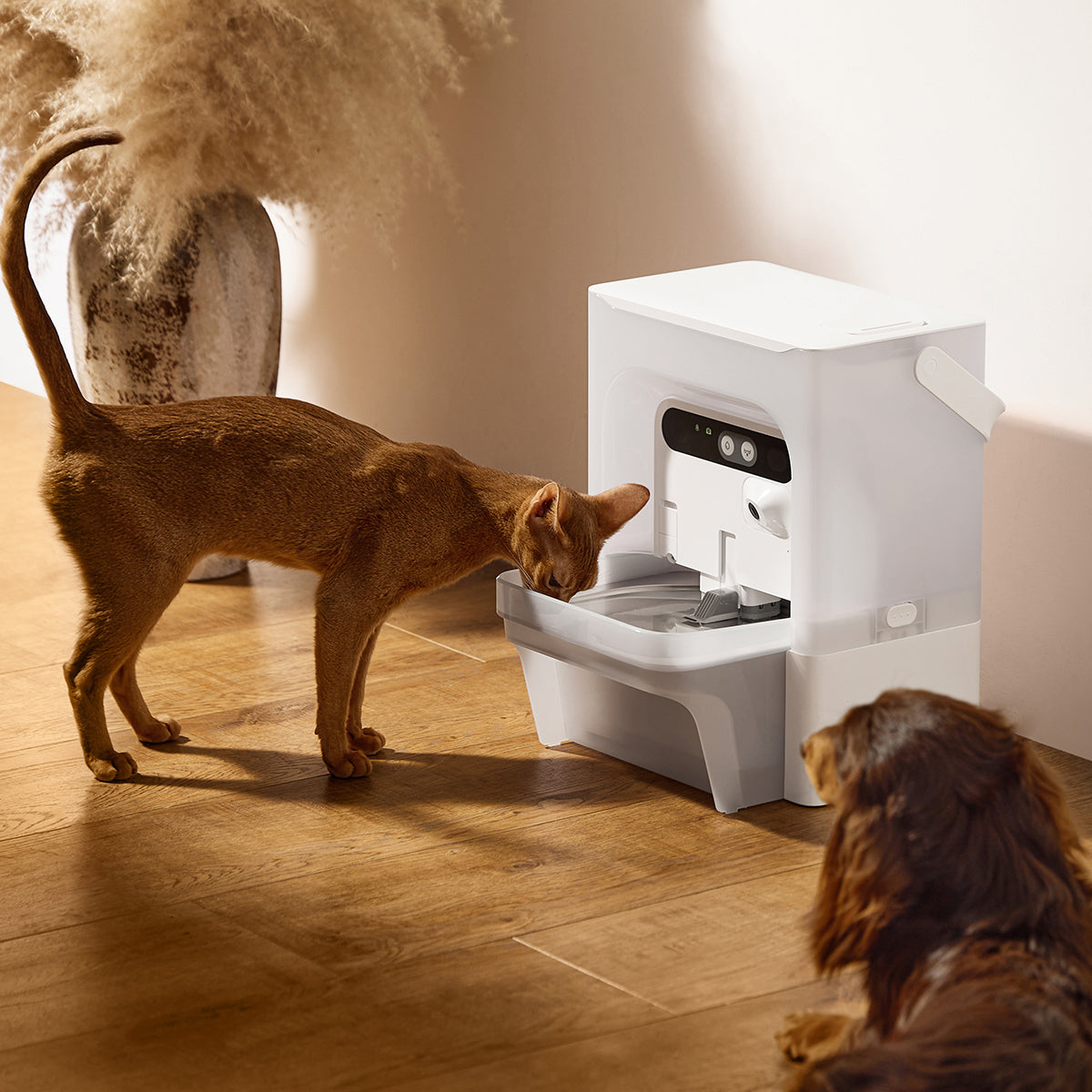
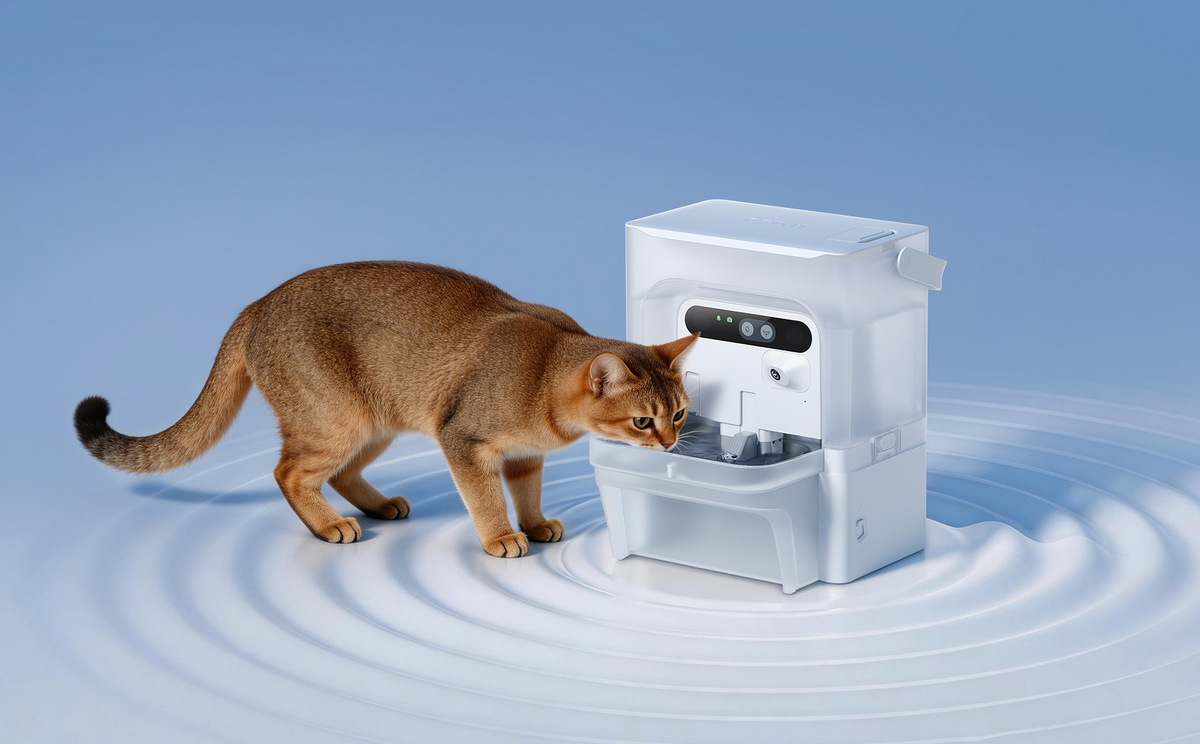
The PETKIT EverSweet Ultra uses a One Way Mechanism: water flows in a single direction from a sealed 5 L clean water tank into a 350 ml 304 food-grade stainless steel drinking tray, and used water drains directly into a separate 1.8 L waste water tank.
What this means for preventing chin acne:
In a traditional recirculating fountain, the same batch of water flows repeatedly through the pump, tubing, and tray, allowing biofilm to build up throughout the entire system. The One Way Mechanism design eliminates this problem at the structural level—used water goes into the waste water tank and never comes into contact with the clean water in the Clean water tank again.
Key design features include:
- SUS 304 food-grade stainless steel drinking tray:a dense, non-porous surface with a much lower bacterial attachment rate than plastic; dishwasher-safe for thorough cleaning
- Fully removable components: the drinking tray, fountain outlet, and magnetic strainer can all be taken out and placed in the dishwasher; there are no hidden biofilm blind spots or hard-to-reach areas
- Fountain Cube C: activated carbon helps remove chlorine, antibacterial layer cuts slime buildup by 30%, and extends water freshness; recommended replacement every 30 days
- 9-sensor fully automatic flushing and refilling: with a single tap in the app, the system automatically drains, rinses the tray, and refills, reducing the daily effort required to keep the fountain clean
- SpringFlow flowing water: offers continuous flow, intermittent flow, and motion-sensing flow modes; flowing water slows biofilm formation compared with still water
- Capacity and runtime: A 5 L clean water tank can last roughly 15 days for a single cat (based on lab test data), making it suitable for multi-cat households or owners who travel frequently.
PETKIT EverSweet Max 2 (UVC): Continuous UVC Sterilization
The EverSweet Max 2 (UVC) integrates a UVC ultraviolet sterilization module inside its wireless pump, continuously irradiating the water to disrupt bacteria and inhibit reproduction. Third-party testing reports an antibacterial rate of 99.96% (report number: EGZ220720127C0001R).
Key design features include:
- Continuous UVC sterilization: actively disinfects the water rather than relying on filtration alone, helping control bacterial contamination at the source
- 304 stainless steel drinking tray: the same non-porous, dishwasher-safe material used in the Eversweet Ultra, eliminating plastic contact surfaces as a potential trigger for chin acne
- RECT sintered activated carbon filter cartridge: removes residual chlorine, hair, and other impurities from tap water, improving both cleanliness and taste
- Fully disassemblable design with water and electronics separated: each component can be washed independently for thorough, blind-spot-free cleaning
- 5000 mAh wireless lithium battery: provides up to 83 days of battery life (based on lab test data), so placement is not restricted by outlet location and the fountain can be positioned flexibly
Capacity: 3 L (equivalent to six 500 ml bottles of water), lasting roughly two weeks for a single cat.
Comparing the Two: Which Scenario Each Suits
Both fountains are built around the core risk factors for feline chin acne: a stainless steel drinking surface, easy and thorough cleaning, flowing water, and reduced biofilm buildup. The key difference lies in how each model maintains water quality.
| EverSweet Ultra | EverSweet Max 2 (UVC) | |
|---|---|---|
| Core design concept | One-way water path; used water never flows back | Continuous active UVC sterilization |
| Drinking tray material | SUS 304 stainless steel | SUS 304 stainless steel |
| Antibacterial method | Structural anti-backflow design + CUBE C filter | UVC ultraviolet light (third-party tested at 99.96% antibacterial rate) |
| Disassembly for cleaning | All components are removable | Fully disassemblable design with water and electronics separated |
| Capacity | 5L; roughly 15 days for a single cat | 3L; roughly 2 weeks for a single cat |
| Power supply | Requires a plugged-in power source | 5000mAh battery, ~83 days of runtime, no fixed outlet needed |
| Better suited for | Households that want to structurally avoid recirculation contamination and have a fixed spot to place the fountain | Households that prefer active UVC sterilization, or where the placement location makes plugging in inconvenient |
For cats with existing chin acne or recurring flare-ups, both models are a significant upgrade over plastic bowls or ordinary recirculating fountains. If your priority is to eliminate the recirculation contamination pathway at a structural level, the EverSweet Ultra's One Way Mechanism, non‑recirculating mechanism is more targeted. If independently verified antibacterial performance is more important, the EverSweet Max 2 (UVC)'s 99.96% tested antibacterial rate provides a clear, quantifiable benchmark.
Practical Steps to Reduce the Risk of Feline Chin Acne
- Consider replacing plastic bowls: Switching plastic food and water bowls to stainless steel or ceramic is one of the most widely recommended environmental interventions.
- Clean the drinking surface daily: Even when using a fountain, the drinking tray should be wiped down or rinsed every day.
- Fully disassemble and clean every 1–2 weeks: Take the fountain completely apart and clean all components; dishwasher‑safe parts can go straight into the dishwasher on a hot cycle.
- Check regularly for early symptoms: Part the fur on your cat’s chin weekly to look for blackheads; early‑stage chin acne responds much better to environmental changes than late‑stage acne.
- See a vet for persistent recurrence: Moderate to severe acne may require topical antibiotics, medicated wipes, or systemic treatment; environmental changes alone may not be sufficient.
When to See a Veterinarian
You should consult a veterinarian if you notice any of the following:
- Noticeable swelling, oozing, or discharge of pus on the chin
- A clear pain response when the affected area is touched
- No improvement—or worsening—after 4+ weeks of home environmental interventions (such as changing bowls and increasing cleaning frequency)
- Accompanying large‑area hair loss, reduced appetite, or other systemic symptoms
Frequently Asked Questions About Feline Chin Acne
Q: Can a water fountain actually cause feline chin acne?
A:A water fountain itself does not directly cause chin acne, but a poorly maintained fountain or one with a plastic drinking tray can become a trigger. The key risk factors are the material of the drinking surface (plastic vs. stainless steel), cleaning frequency, and whether biofilm is allowed to build up. A well‑maintained stainless steel fountain is far less likely to trigger chin acne than a plastic bowl or a poorly cleaned recirculating fountain.
Q: My cat has chin acne—should I switch to a fountain?
A: Switching to a stainless steel fountain is one of the most commonly recommended environmental interventions for recurring feline acne, especially if a plastic bowl is currently in use. Veterinary dermatology experts generally recommend eliminating all plastic contact surfaces first. A stainless steel drinking surface, an easy‑to‑disassemble design, and flowing water together address multiple risk factors at once.
Q: Can feline chin acne be treated at home?
A: Mild feline chin acne can usually be managed effectively at home: immediately stop using plastic bowls, switch to stainless steel or ceramic, gently clean the affected chin area daily, and increase how often the water bowl is cleaned. Most mild cases show noticeable improvement within 2–4 weeks of environmental changes. Moderate to severe cases (with swelling, discharge of pus, pain, or large‑area hair loss) require veterinary care and may need prescription medication.
Q: Which is better for preventing chin acne—the PETKIT EverSweet Ultra or the Max 2 (UVC)?
A: Both use an SUS 304 stainless steel drinking tray and support full disassembly for cleaning, which are the two most important factors in preventing chin acne. The EverSweet Ultra's One Way Mechanism means water is never recirculated within the same system, structurally eliminating the contamination backflow pathway. The EverSweet Max 2 (UVC) adds continuous UVC sterilization, with an antibacterial rate independently verified at 99.96%. Both represent a significant improvement over plastic bowls or ordinary recirculating fountains.
Q: How often should a water fountain be cleaned to help prevent chin acne?
A: The drinking surface should be rinsed daily, fully disassembled and cleaned every 1–2 weeks, and cleaned immediately if it feels slimy, shows discoloration, or has an odor. The stainless steel parts of both the EverSweet Ultra and Max 2 (UVC) are dishwasher‑safe, making thorough cleaning easier than with fountains that rely on plastic components.
Q: Is feline chin acne serious?
A: Mild feline acne (a small number of blackheads with no inflammation) is common and can usually be managed through environmental changes. Moderate to severe cases—with swelling, pustules, oozing, or pain on touch—require veterinary care and may need antibiotics or anti‑inflammatory treatment. Mild chin acne that keeps recurring even after environmental improvements is a clear sign to re‑examine bowl material and cleaning habits.
Q: Can feline chin acne spread to other cats in a multi‑cat household?
A: Feline acne itself is not contagious. However, if a shared contaminated water source is the trigger, multiple cats in the household may each independently develop chin acne. Multi‑cat households using a shared plastic bowl or a poorly maintained recirculating fountain face a higher overall risk.
Conclusion: The Root of Feline Chin Acne Is an Environmental Issue, Not Just a Skin Issue
Current evidence points clearly to three interventions that effectively lower the risk of chin acne: eliminating plastic contact surfaces, keeping water continuously flowing, and maintaining frequent, thorough cleaning. A fountain with a stainless steel drinking surface that either does not recirculate water or actively sterilizes it can meet all three conditions at once.
Feline acne is rarely just a skin problem—it is often an environmental issue that can be improved by changing how water is provided. If your cat keeps developing chin acne and you have not yet re‑examined your water source, start by changing the bowl material and increasing cleaning frequency.