

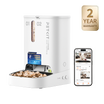
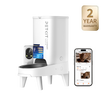
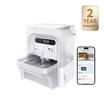
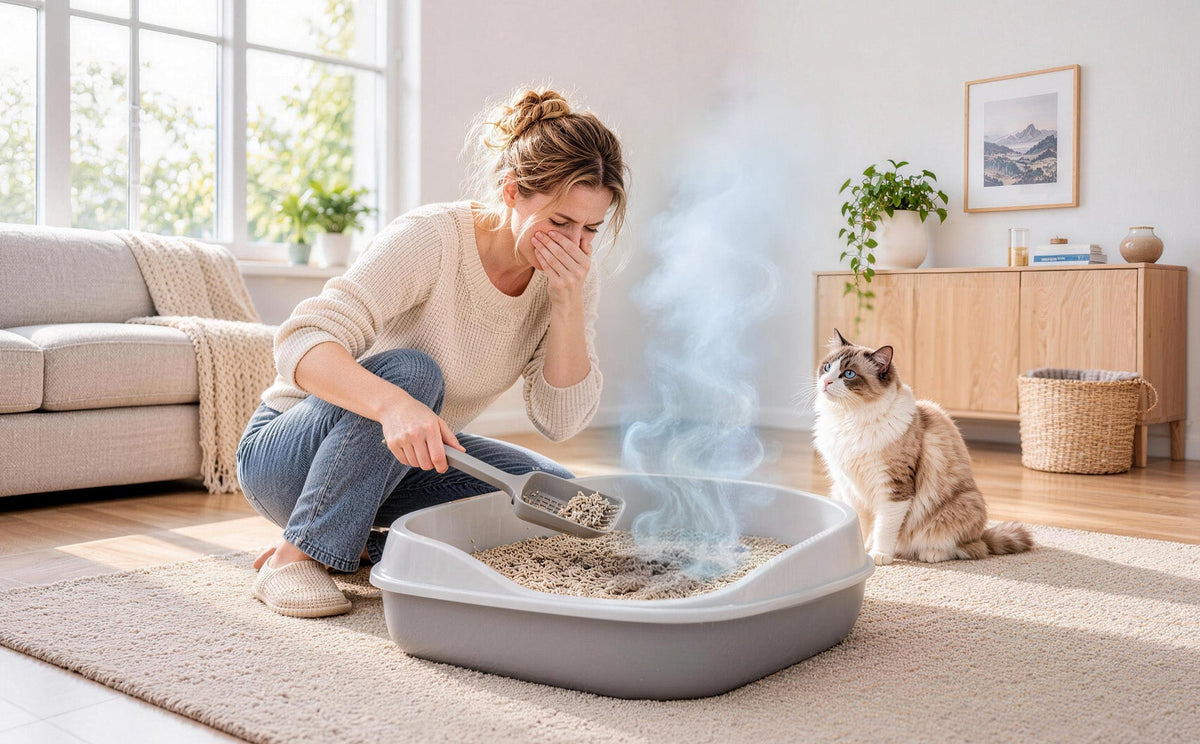
To dispose of cat litter without the smell, scoop it, seal it right away, and get it out of the house. That's easy to say. The hard part is the middle, holding your breath, squeezing the air out of the bag, and tying a knot with your face right over it. Here are the 3 steps, why that middle step always stinks, and a way to skip the knot for good.
How to Dispose of Cat Litter in 3 Steps
Step 1: Scoop once a day and drop the waste into a bag
Scoop every clump and every solid piece at least once a day, and twice a day if you have more than one cat. Use a sturdy bag, hold the opening wide, and tip the waste in so nothing lands on the rim. Don't leave clumps sitting in the box, and don't drop them into an open can "just for now."
Step 2: Squeeze out the air and tie it tight
Press the air out of the bag, then knot it as close to the waste as you can. If the bag is thin or the litter is heavy clay, double-bag it so a sharp clump can't push through.
Step 3: Put it in an outdoor bin with a lid
In most places, used cat litter goes in regular household trash. Check your local rules, never put it in the recycling bin, and keep the outdoor bin's lid closed so flies and animals stay out. Wash your hands with soap and water when you're done.
What never goes down the toilet, into the compost, or onto the yard
-
The toilet. Clumping and clay litters swell in water and can clog your pipes, and cat waste can carry a parasite that wastewater treatment doesn't reliably remove. That includes litter labeled "flushable."
-
The compost. Only plant-based litter belongs in a compost pile at all, only in a separate pile kept away from anything you eat, and most people are better off skipping it.
- The yard. Buried or dumped litter washes into soil and storm drains, and there is no safe outdoor spot for it.
Why Disposing of Cat Litter by Hand Always Smells
Those three steps are the right ones. They're also where every bit of the smell comes from, because each one has you handling an open bag of waste.
Holding your breath while you aim at the bag
One hand holds the bag open while the other tips in heavy, wet clumps. You lean in, you stop breathing, and you hope nothing misses. A bag that sags or folds over means a clump on the floor, and then you're cleaning up as well.
Squeezing out the air and tying the knot at nose level
To get a knot tight, you have to squeeze, and squeezing pushes the air in the bag, along with its smell, straight out of the opening toward your face. The tighter you press, the harder it hits.
Opening the trash can to yesterday's smell
If the bag goes into the bin between trash days, every new scoop means lifting the lid on whatever has built up since yesterday. The smell doesn't leak out slowly. It's waiting for you the second the lid comes up.
Carrying a swinging bag through the house
The bag swings, brushes the doorframe, and drips if it's overfull. A thin one can split halfway to the bin, and then the smell has the whole house to spread through.

Why a lidded bin or pail doesn't fix it
A lidded bucket or pail may seem like a solution, but standard plastic trash bins easily absorb and retain harsh odors over time, making them nearly impossible to clean thoroughly. Worse yet, every time you open the lid to drop a new scoop, trapped odor escapes straight into the room. And when it’s time to empty it, you still have to manually reach in, cut, or tie the dirty bag yourself. Better storage doesn't mean zero odor—the smell still escapes, and dirty hands remain.
How to Dispose of Cat Litter Hands-Free and Odor-Free
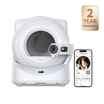
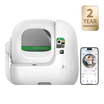
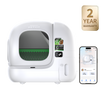
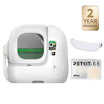
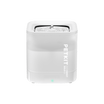
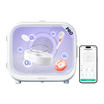
The PETKIT AutoSeal Cat Litter Disposal System is a sealed container you scoop into by hand, just like you do now. What it takes away is every moment from the section above.
Scoop, drop, seal: how PETKIT AutoSeal works
Scoop the clumps into the unit and close the lid. A door inside opens on its own, drops the waste into the bin below, and seals shut again. When the liner is full, you press a lever and it heat-seals the bag for you. There is no tying, no cutting, and no reaching in.
No more aiming and spilling: a wide opening you scoop straight into
The opening is wide, so you can tip the scoop straight in without steadying a bag with your other hand. Fewer clumps end up on the rim, and you don't have to hold your breath to aim.
No more knot: one press heat-seals the bag
Press the lever once and the filled section of the liner is sealed closed, with no knot to tie and no direct contact with what's inside. The liner is one continuous roll, so a fresh, empty section moves into place right after. It's made with 7-layer EVOH film built to keep the smell in the bag, and PETKIT Lab tested its seal across 1,000 trials with zero measurable leakage.
No more smell bomb: the auto-sealing door keeps yesterday's waste below
The lid seals over every scoop, and the door separates the space you scoop into from the 8L bin below. Lift the lid tomorrow and the waste you added yesterday is designed to stay down there, instead of coming up to meet you. If you'd rather drop a scoop right away, a manual button does it mid-scoop.
No more swinging bags: carry out a bag that's already sealed
Both ends of the filled section are sealed, so there's nothing open to drip or spill on the way to the bin. And because the bin holds about two weeks of waste for one cat, you make that walk far less often.
Built for real homes
-
Fits where you live. It's slim enough to tuck beside the litter box or into a bathroom corner, even in a small apartment.
-
Two weeks, not two days. The 8L bin holds about 15 days of waste for one cat and roughly a week for two, so the trash goes out a couple of times a month instead of every few days. Those are estimates, and your result depends on your cats and your litter.
-
Restock twice a year with long-lasting odor protection. One refill ring lasts a single cat about five months, and a starter ring comes in the box. Unlike standard trash bags, the AutoSeal Refill Ring Pro uses a 7-layer EVOH film built to keep odors locked inside instead of leaking through.
-
No cord. The rechargeable battery lasts up to eight months of everyday use in a single-cat home, so you can put it anywhere.
- Easy to live with. It works with all clumping litter, the top chute lifts out to rinse, and anti-tip feet keep it from sliding when a cat brushes past.

Is AutoSeal right for you?
If any part of your routine makes you wince, whether it's the aiming, the knot, or the smell when you lift the bin lid, AutoSeal was made for you. It's a natural fit for apartment dwellers who want waste sealed away right beside the litter box, for multi-cat homes that scoop all day, and for anyone who would happily never tie off a bag of cat waste again.
Cat Litter Disposal in a Small Apartment, a Multi-Cat Home, and Hot Weather
Small apartment with no outdoor bin
In a small apartment, scooped waste stays indoors and air doesn't move much. Placing AutoSeal next to the litter box helps: its 8L waste bin holds up to 15 days of waste for a single cat, keeping litter waste contained in a compact unit so you make fewer trips to the dumpster. When it's time to empty, the heat-sealing feature seals the bag shut before you open your door, so odor stays locked in on your way out.
Multi-cat household
More cats mean larger scoops and frequent opening, which lets smells out. AutoSeal's 2L upper section handles what multi-pet homes produce at once in a single scoop. While you scoop, the smart auto-door stays shut to hold waste above; when you close the lid, the auto-sealing door opens on its own to drop the waste into the 8L bin below and seals shut again, so odor stays locked in and never escapes back into the room.
Summer: flies and maggots
Heat makes litter smell stronger and flies show up fast. They lay eggs on exposed waste, and the eggs hatch quickly, so even a small gap is enough. Keep the waste sealed at every stage, keep the outdoor bin's lid closed and in the shade, empty it regularly, and rinse it from time to time. When you press the lever, AutoSeal heat-seals the filled section of the liner at both ends, keeping the waste enclosed and leaving no open ends for flies to enter directly.
Cat Litter Disposal FAQ
Can you flush cat litter?
Generally, flushing cat litter is not recommended. Clumping and clay litters swell in water and can clog your pipes, and cat waste can carry parasites that wastewater treatment doesn't reliably remove. Unless your local regulations explicitly allow it and you use small amounts of specific water-soluble natural litters, bagging waste and placing it in household trash is the safer routine.
Is flushable cat litter really flushable?
Some plant-based litters are formulated to dissolve in water for modern plumbing. However, flushing large amounts at once can still clog pipes, and concerns regarding wastewater treatment remain. For most homes, disposing of waste in a sealed bin is still the cleaner and safer choice.
Can cat litter go in the compost?
Only plant-based litters such as wood, paper, corn, or wheat, and only in a separate pile kept away from anything you eat. Clay litter should never be composted. For most homes, the trash is simpler and safer.
Can I put cat litter in the regular trash?
In most places, yes. Bag it securely, use an outdoor bin with a tight lid, and check your local waste rules. Never put it in the recycling bin.
What is the best bag for cat litter disposal?
A sturdy, leak-resistant bag that closes tightly is essential for cat litter disposal. Double-bag it if the bag is thin or the litter is heavy. Scented bags may mask odors without effectively containing them, while PETKIT AutoSeal Refill Ring Pro uses 7-layer EVOH film technology to help keep odors contained. Its heat-sealing function seals the filled section of the liner at both ends, so there's no need to tie knots by hand.
How often should you dispose of cat litter?
Scoop the box at least once a day. How often you empty your sealed container depends on its size and how many cats you have, from about a week for a small pail to two weeks or more for a larger unit with one cat.
Are cat litter disposal systems worth it?
It depends on your home. They help most if you have no easy access to an outdoor bin, live with several cats, or dread tying off the bag. If you have one cat and walk out the trash every day, a lidded bin and sturdy bags may be all you need.
Scooping was never the hard part. What comes after is. If the knot and the trash-can smell are what you dread most, see how the PETKIT AutoSeal Cat Litter Disposal System works, or read our full introduction to AutoSeal.

