






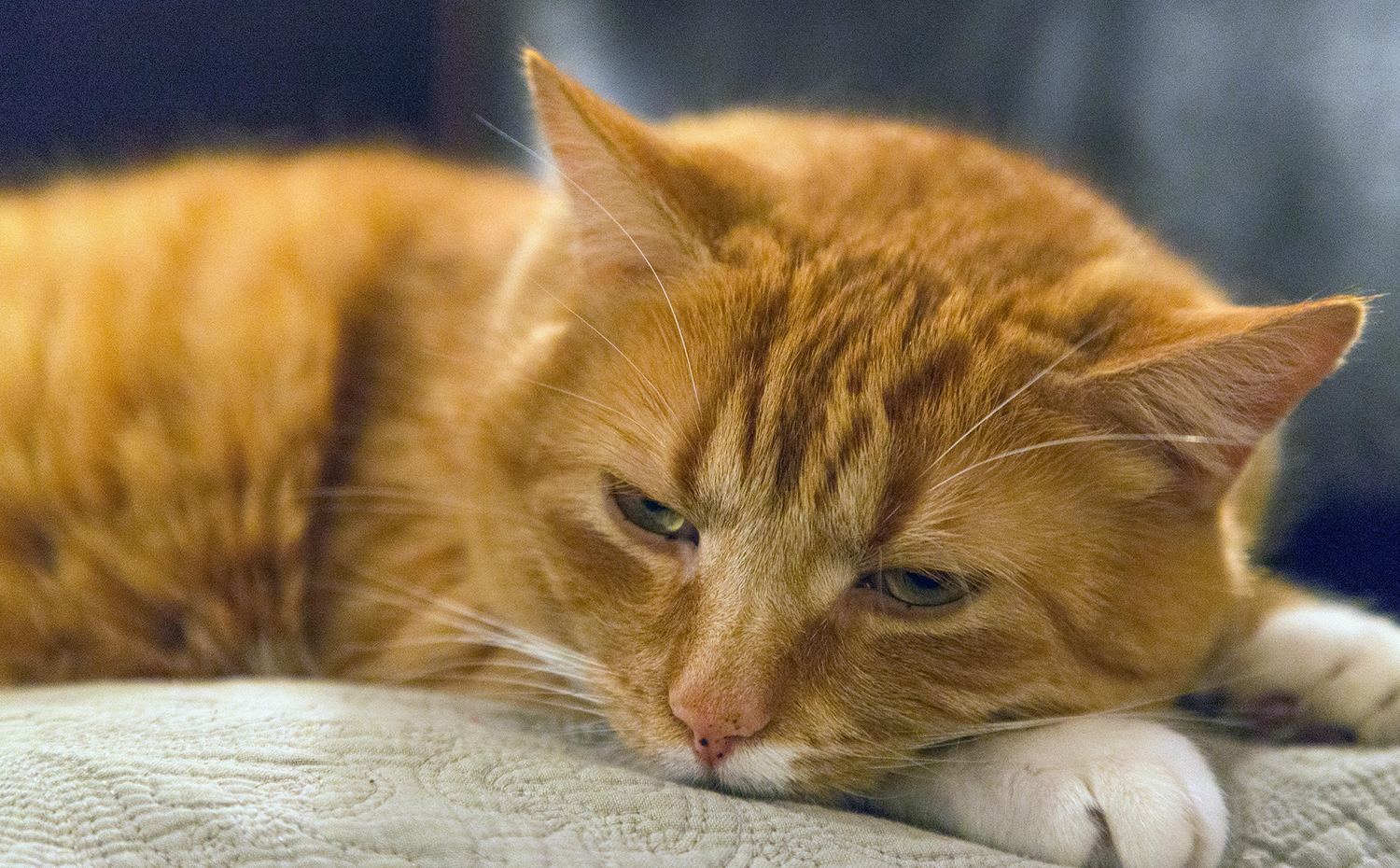
Quick Answer: Chronic kidney disease (CKD) is one of the most common conditions in older cats, affecting approximately 40% of cats over 10 years of age and up to 80% of cats over 15. Hydration is one of the few directly manageable factors in slowing CKD progression. The International Society of Feline Medicine (ISFM) consensus guidelines on feline CKD explicitly recommend that cats with CKD have access to fresh water at all times and encourage the use of flowing water sources—such as automatic pet water fountains—to promote water intake.
This article covers: the prevalence of feline chronic kidney disease (CKD) and age-related risk data; daily water-intake requirements for cats with CKD; the evidence supporting the use of flowing water sources for cats with kidney disease; at-home hydration management strategies; dietary recommendations for cats with CKD; and what to look for in a smart water fountain for CKD care.
What Is Feline CKD and Why Hydration Is Central to Management
Chronic kidney disease (CKD) is defined as a persistent abnormality in kidney function or structure lasting more than three months. It is a progressive, irreversible condition in which the kidneys gradually lose their ability to filter waste products from the blood. Research indicates that approximately 40% of cats over 10 years of age are affected, with that figure potentially reaching 80% in cats over 15.
Insufficient water intake is one of the key modifiable factors that can accelerate kidney damage. The International Society of Feline Medicine (ISFM) consensus guidelines on the diagnosis and management of feline CKD explicitly state that cats with CKD should have access to fresh water at all times and recommend the use of flowing water sources—such as pet water fountains—to encourage active drinking.
Although CKD currently has no cure, early detection and long-term management can significantly extend a cat's lifespan and help maintain quality of life.
Feline CKD Prevalence and Age-Related Risk: The Data
Based on data from the Cornell University College of Veterinary Medicine and multiple peer‑reviewed studies:
- Approximately 40% of cats over age 10 are affected by CKD
- In cats over 15 years of age, this figure may reach 80%
- The single most well‑established risk factor is age — all senior cats, regardless of breed or lifestyle, are considered at elevated risk
- In one United Kingdom study, CKD was the most common cause of death in cats over 5 years of age, accounting for more than 13% of all feline deaths
What makes CKD particularly challenging to manage is how late its symptoms typically appear. Cats may lose 65–75% of kidney function before showing any detectable clinical signs. By the time a cat presents with polyuria, polydipsia, weight loss, or reduced appetite, the disease has often already progressed to a moderate or advanced stage.
This is why preventive hydration management and regular veterinary screening are recommended for all cats aged 7 years and older — not just those already diagnosed.
Early Signs of CKD in Cats: What to Monitor
Because cats instinctively conceal signs of illness, CKD symptoms often only become apparent once the disease has already progressed. Key signs to monitor include:
- Increased drinking and urination (PU/PD): Noticeably faster depletion of the water bowl and larger urine clumps in the litter box
- Weight loss and reduced appetite: Gradual loss of body condition and increasing food selectivity
- Vomiting and lethargy: Often resulting from the accumulation of uremic toxins in the bloodstream
- Dull, unkempt coat: Reduced self-grooming due to general malaise
- Pale gums: May indicate anemia, which is commonly seen in moderate to advanced CKD
If any of these signs are observed, promptly arrange a veterinary consultation for blood and urine testing. Early-stage CKD intervention is associated with significantly better outcomes than late-stage management.
Why Cats Are Prone to Chronic Dehydration — and How This Connects to CKD
Understanding this relationship requires a look at feline evolutionary biology.
The ancestors of domestic cats were desert hunters who obtained most of their moisture from prey — fresh animal tissue contains approximately 70–80% water. Over time, this evolutionary strategy led to a characteristically low thirst drive: the brain's threshold for recognizing dehydration is higher in cats than in humans or dogs. As a result, even mildly dehydrated cats may not actively seek water.
The daily water requirement for cats is approximately 40–60 ml per kilogram of body weight. For a 4 kg cat, total daily fluid intake (including moisture from food) should be around 200–250 ml. Research consistently shows that cats fed dry food have significantly lower overall hydration than cats on wet-food diets.
In the modern indoor environment, this low-thirst mechanism becomes a health liability:
- Dry kibble contains only about 10% moisture, requiring cats to make up the deficit through active drinking
- Still, standing water is generally less appealing to cats than flowing water
- Mild chronic dehydration causes no immediate, obvious distress but creates sustained renal stress over time
Some researchers have proposed that recurrent mild acute kidney injury (AKI) and chronic subclinical dehydration may be contributing factors in the development of idiopathic feline CKD — a hypothesis that underscores why daily hydration quality matters even in cats with no current diagnosis.
What the Research Shows: Flowing Water, Dehydration, and CKD Progression
Dehydration Accelerates CKD and Is an Early Warning Indicator
Polyuria and polydipsia are among the most characteristic clinical signs of moderate-to-advanced CKD. As the kidneys lose the ability to concentrate urine, the cat produces large volumes of dilute urine and compensates by drinking more.
The ISFM identifies dehydration, weight loss, reduced urine specific gravity, and elevated serum creatinine as important indicators of CKD onset or progression. This creates a reinforcing cycle:
Declining kidney function → reduced urine-concentrating ability → increased urine output → fluid loss → dehydration → reduced renal perfusion → further kidney decline
The most fundamental intervention for interrupting this cycle is ensuring continuous access to high-quality water.
Flowing Water Sources Increase Voluntary Water Intake in CKD Cats
Flowing water sources have been included by the ISFM as a recommended hydration intervention for cats with CKD. A crossover study published in PMC involving 13 healthy cats found that 24‑hour water intake was higher when water was provided via a flowing fountain compared with a still bowl. This is consistent with feline evolutionary instinct: moving water signals freshness and a lower risk of contamination in the natural environment.
The ISFM guidelines explicitly list pet water fountains as one of the recommended measures to encourage active drinking in CKD cats, alongside providing multiple water sources in different locations throughout the home.
Water Quality Matters More for CKD Cats Than for Healthy Cats
Cats with CKD commonly have some degree of immune compromise, making them more sensitive to bacterial contamination in water. Biofilm and bacterial accumulation develop more rapidly in still, standing water than in water that is continuously circulated and filtered.
For a cat with CKD, the ideal water source should provide:
- Continuous circulation to inhibit bacterial growth
- Effective filtration to remove hair, debris, and particulate matter
- Additional antibacterial mechanisms where possible (such as UVC sterilization)
- Non‑porous materials — food‑grade stainless steel is preferable to plastic for the drinking surface
Phosphorus Control and Hydration Work Together to Slow Disease Progression
VCA Animal Hospitals' veterinary nutrition guidance notes that dietary phosphorus restriction is one of the most evidence‑supported interventions for slowing CKD progression, typically achieved through veterinary prescription renal diets. Adequate hydration complements this by diluting phosphorus and other waste products in the urine, reducing the burden on the kidneys' excretory function.
These two interventions are not interchangeable — they are synergistic. Dietary management controls renal load; sufficient hydration supports renal excretion. Both are required for effective long‑term CKD management.
Five Tips At-Home Hydration Management for CKD Cats
Based on the ISFM Consensus Guidelines and VCA clinical guidance, at-home hydration management for cats with CKD can be viewed as five distinct levels:
- Ensure continuous access to fresh, flowing water – CKD cats should have access to high-quality fresh water at all times — not just a bowl that is not empty, but water maintained at a quality level the cat is willing to drink. Automatic water fountains provide continuous circulation and filtration, maintaining a baseline standard of water quality without requiring the owner to be present. This makes them more appropriate for the long-term care of CKD cats than conventional water bowls.
- Provide multiple water sources – Research indicates substantial individual variation in feline water-source preferences — some cats prefer flowing water, some prefer specific container materials, and some drink better when water is positioned away from their food bowl. Providing CKD cats with multiple drinking points in different locations and formats helps increase total daily intake.
- Transition to a wet food diet – An 85 g can of wet food contains approximately 60–70 ml of water — a direct and meaningful contribution to hydration. The ISFM guidelines recommend that CKD cats be fed wet food as their primary diet wherever possible. Water can also be added directly to food, with care taken to maintain appropriate nutrient ratios.
- Subcutaneous fluid therapy when oral intake is insufficient – For cats with moderate to advanced CKD whose oral water intake alone cannot maintain adequate hydration, veterinarians may recommend home subcutaneous fluid administration. This involves the owner administering fluids under the skin at home under veterinary guidance. Subcutaneous fluids are an important component of advanced CKD management but must only be performed following veterinary assessment and strictly at the prescribed volume and frequency.
- Monitor drinking behavior for changes – Both sudden increases in drinking (polydipsia) and sudden decreases (reluctance to drink) are clinically significant in a CKD cat. The ISFM recommends that cats aged 7 years and older receive comprehensive health examinations at least every six months, including body weight, blood pressure, blood biochemistry, and urinalysis (SDMA, creatinine, BUN, urine specific gravity).
What to Look for in a Water Fountain for a CKD Cat
Selecting a water fountain appropriate for a CKD cat requires attention to five specific criteria: water hygiene mechanism, flowing water incentive, individual pet identification, drinking behavior monitoring and anomaly alerts, and material safety.
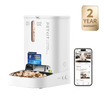
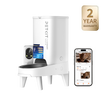
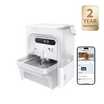
PETKIT EverSweet Ultra: Design Features Relevant to CKD Cat Care
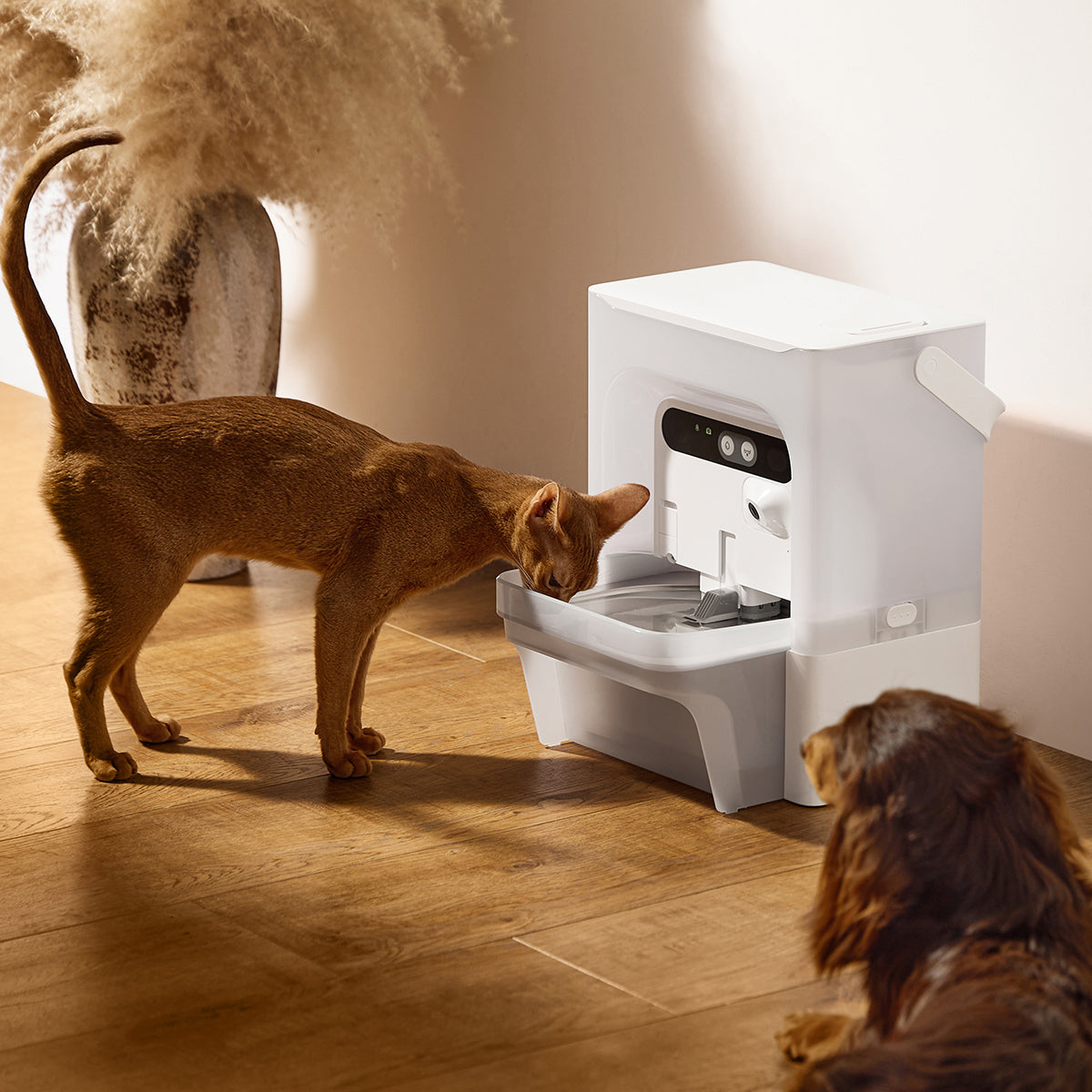
The PETKIT EverSweet Ultra is designed for multi-pet households and supports shared use by cats and small dogs. Its design addresses each of the five criteria above in the context of CKD management.
OneWay Mechanism: Structural elimination of water recontamination
The EverSweet Ultra's OneWay mechanism fundamentally changes how water is handled compared with conventional recirculating fountains. Fresh water flows from a 5 L sealed Clean Water Tank into a 350 ml 304 food‑grade stainless steel drinking tray in one direction only. Used water drains into a separate 1.8 L Waste Water Tank and never returns to the clean water supply — the two tanks remain completely isolated.
For a CKD cat, this is particularly important. In conventional recirculating fountains, water continuously passes through the same tubing and pump, allowing biofilm and bacteria to accumulate over time. For a cat with reduced immune function, this represents an ongoing contamination risk. The OneWay design eliminates this structurally — used water never re‑enters the clean tank.
SpringFlow Moving Water: Activating instinctive drinking behavior
The EverSweet Ultra features SpringFlow, which simulates natural spring movement across three modes:
- Continuous flow: A steady, consistent stream suitable for cats that respond to a regular water sound
- Intermittent flow: Mimics natural intermittent spring movement, which can be more engaging for curious cats
- Motion‑activated flow: Activates automatically when a pet approaches, conserving water while adding an interactive element
In all SpringFlow modes, water movement occurs within the drinking tray but does not recirculate into the clean reservoir. The OneWay hygiene mechanism remains intact regardless of the selected flow mode.
AI Camera: Individual pet identification and Behavioral Activity Tracking
The EverSweet Ultra's integrated 1080P AI camera with 140° wide‑angle coverage monitors the full drinking area and provides individual pet recognition for up to 15 pets simultaneously.
Each cat's profile is registered through the PETKIT app with a single uploaded photo. The system uses a three‑algorithm model combining facial landmark detection, coat pattern and texture analysis, and body morphology recognition to distinguish individual cats reliably. The camera operates in low‑light conditions down to 20 lux and supports infrared night vision.
A noticeable increase in drinking over several days or weeks can be recorded as part of a cat’s drinking history. The PETKIT EverSweet Ultra app provides an individual drinking history timeline, allowing owners to review changes in drinking activity over time.
If you notice a change in your cat’s drinking habits, the recorded information can also be shared with a veterinarian to provide additional context about the cat’s drinking activity.
SUS 304 Stainless Steel Drinking Tray: Material hygiene at the point of contact
The EverSweet Ultra's drinking tray is made from SUS 304 food‑grade stainless steel. Its dense, non‑porous surface resists bacterial adhesion and proliferation more effectively than food‑grade ABS plastic, which is inherently microporous and more prone to biofilm formation over time. The drinking tray, fountain outlet, and magnetic strainer are all dishwasher-safe and simply snap on and off without tools, making routine cleaning straightforward.
Quiet Operation: Sustained 24‑hour use without disruption
The EverSweet Ultra operates at ≤26 dB (measured at 50 cm distance in fountain mode under PETKIT laboratory conditions) — below normal conversational speech levels. For a CKD cat requiring around‑the‑clock water access, this ensures the fountain can run continuously without disturbing the cat or household members during sleep.
Frequently Asked Questions: CKD Cats and Water Fountains
Q: How much water does a cat with CKD need to drink each day?
Q: Does a water fountain actually help cats with CKD drink more?
Q: What is the prognosis for a cat diagnosed with CKD? How long can they live?
Q: My CKD cat is suddenly drinking much more than usual. Is this normal?
Q: What else does a CKD cat need beyond a water fountain?
1. Dietary management — Transition to a veterinary prescription renal diet to restrict dietary phosphorus intake
2. Hydration support — Prioritize wet food and a pet water fountain to increase voluntary intake; subcutaneous fluid therapy under veterinary guidance when oral intake is insufficient
3. Regular monitoring — Blood biochemistry (SDMA, creatinine, BUN), urinalysis, and blood pressure assessment at minimum every six months
4. Complication management — Targeted treatment for common CKD complications including hypertension, hypokalemia, anemia, and nausea or appetite loss
A water fountain supports the hydration component of this management framework. It cannot treat CKD, but it helps ensure the cat has continuous access to high‑quality fluid intake — the foundation that makes all other interventions more effective.
Q: How many cats can the PETKIT EverSweet Ultra support?
Summary: Hydration Management Is One of the Most Actionable Interventions in Feline CKD
The scientific evidence is clear: chronic mild dehydration is a significant and modifiable contributor to progressive kidney damage in cats, and flowing water sources are among the most practical measures recommended by veterinary medicine to increase voluntary water intake.
Effective CKD management requires four coordinated interventions — dietary phosphorus restriction, active hydration support, regular monitoring, and complication management — working together. A water fountain addresses the hydration component of this framework not as a luxury, but as infrastructure.
If your cat is over the age of 7, preventive hydration management and regular kidney function screening should begin simultaneously — before symptoms appear. By the time clinical signs are visible, the kidneys have typically already been under sustained pressure for some time.
For further reading, see How Much Water Should a Cat Drink Per Day and Water Fountain for Senior Cats: What to Look For. To explore PETKIT's smart water fountains designed for long-term cat health management, visit the PETKIT EverSweet Ultra product page.