





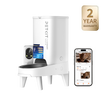
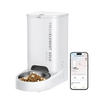
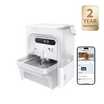



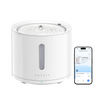




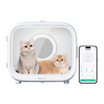

On September 23, 2026, W.X. Guo, Founder and CEO of PETKIT, delivered a keynote on How AI Is Reshaping Preventive Pet Health, sharing PETKIT’s latest advances in AI-powered pet health and its long-term vision for the future of preventive care.
Earlier this year, in May, PETKIT introduced its AI-powered urinary health care ecosystem at Interzoo in Nuremberg, Germany. Today, urinary health is just the starting point. PETKIT is expanding its work into digestive, skin, bone, and joint health, laying the groundwork for AI-powered health support across a pet's entire life.
The shift reflects a broader change in what smart pet technology can do. Smart devices are moving beyond simply automating feeding, hydration, and litter care. They are becoming a way to connect everyday pet data, AI-powered insights, and professional health support—bringing a more continuous view of a pet’s health into the home.
From Treatment to Prevention: A New Way of Approaching Pet Health
For years, pet health has largely followed a familiar pattern: a symptom appears, a pet visits the veterinarian, and treatment begins.
But the challenge doesn’t start when a pet gets sick. Important changes can happen before obvious symptoms appear, and there is another period that deserves attention: recovery after treatment or surgery.
Daily details such as how much a pet eats or drinks, how often they use the litter box, changes in stool, and shifts in behavior can be easy to miss. When those details are tracked consistently over time, however, they can provide valuable context for understanding a pet’s health.
This is particularly important for first-time pet parents, pets recovering from treatment or surgery, and senior pets whose health may need to be monitored over longer periods.
The problem is that observation and memory alone are not always enough. By the time a noticeable change appears, it can be difficult to remember what a pet’s routine looked like days or weeks earlier. During recovery, the lack of continuous information can also make it harder to understand whether things are progressing as expected.
That is why preventive care needs to move beyond isolated observations and reactive responses toward continuous tracking and a better understanding of everyday changes.
The goal is not to replace veterinary care. It is to help pet parents recognize potentially meaningful changes earlier. After treatment, continuous monitoring can also make recovery easier to follow and provide more complete information when professional evaluation is needed.
That is the gap PETKIT is working to bridge: the space between everyday life at home and professional pet health care.
Everyday Pet Behavior Can Reveal Changes Before Symptoms Appear
A better understanding of pet health starts with a better understanding of everyday life.
When meaningful data is collected consistently over time, patterns become easier to see, changes can be put into context, and everyday observations can become more useful.
PETKIT is building an AI-powered smart device ecosystem around some of the most fundamental behaviors in a pet’s daily routine:
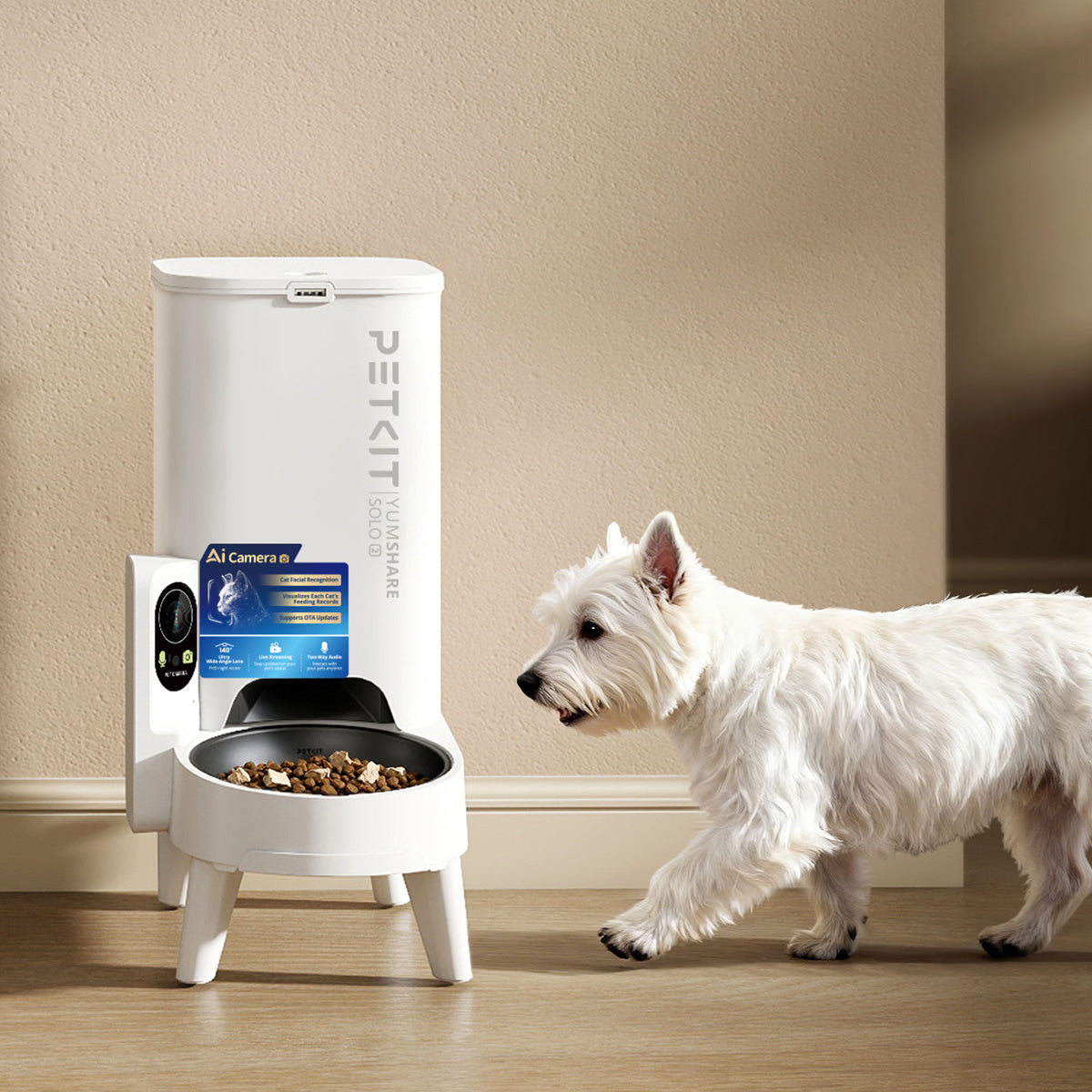
Eating: AI-powered smart feeders can track feeding times, frequency, and related eating behaviors.
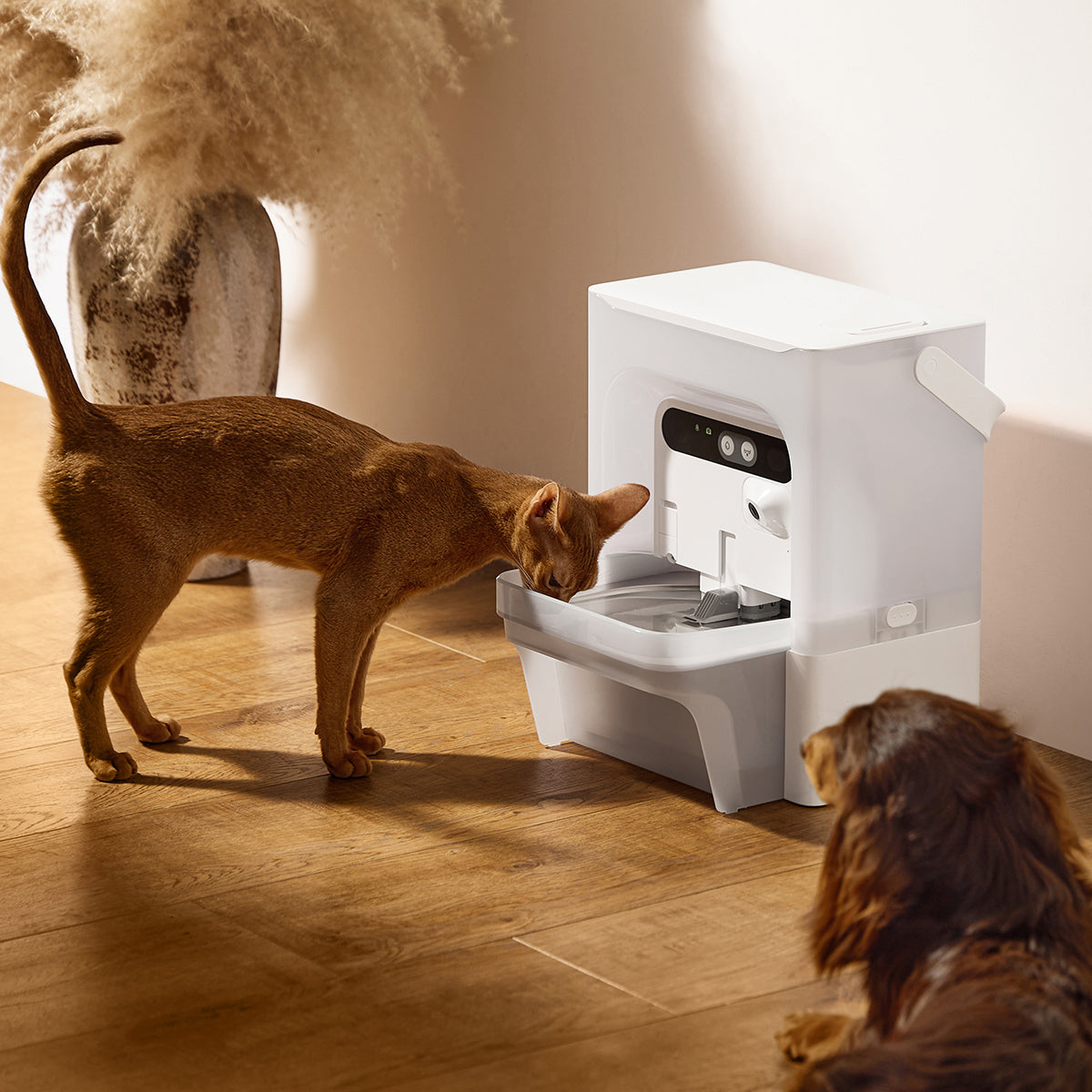
Drinking: AI-powered smart water fountains can monitor drinking activity and build a longer-term picture of hydration patterns.
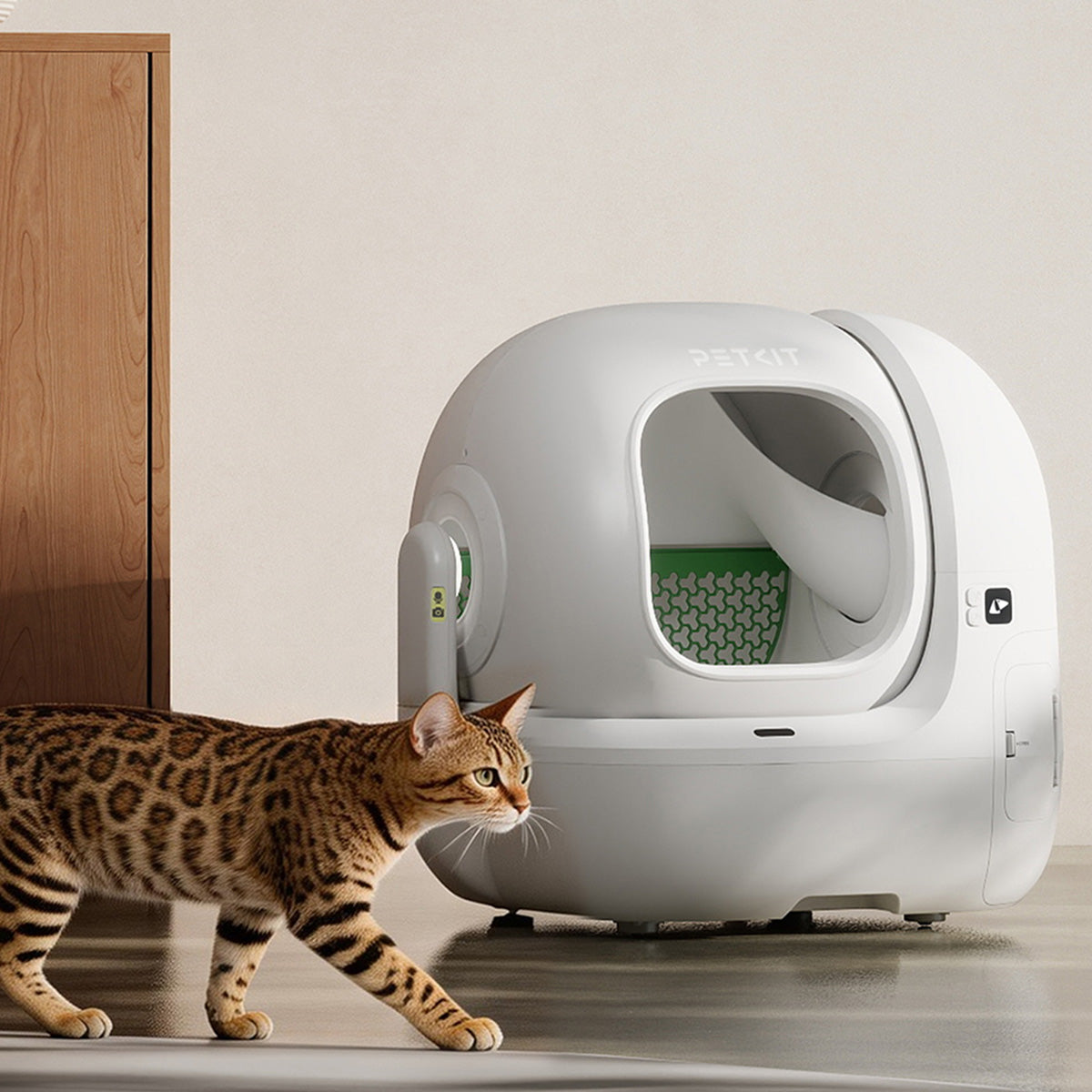
Litter box activity: AI-powered automatic litter boxes can track litter box visits, duration, behavior during use, sounds, and information related to waste.
Behavior: AI-powered cameras and computer vision across PETKIT devices can help identify behaviors such as excessive vocalization, vomiting, changes in activity, and other observable changes.
Today, PETKIT serves more than 6 million pet-owning users worldwide, with products available in more than 180 countries and regions. As this connected ecosystem continues to grow, PETKIT is using real-world pet-care scenarios to continuously improve its products, sensing capabilities, individual pet recognition, and ability to analyze health-related changes.
Together, these capabilities create the foundation for a more connected, AI-powered approach to preventive pet health.
Every Pet Has a Baseline. AI Helps Make Changes Visible.
Continuous data collection is only the beginning.
In a multi-pet household, there is a more fundamental question: Which pet does this data belong to?
A single device may be shared by multiple pets, but their health data cannot simply be combined. For long-term trends to mean anything, each behavior needs to be associated with the right pet.
PETKIT addresses this by using pet photos provided by owners to establish individual pet profiles, then combining those profiles with AI-powered cameras across connected devices to recognize and match individual pets.
Feeding, drinking, litter box activity, and other observable behaviors can then be associated with the appropriate pet.
In other words, health monitoring moves from simply asking “What happened?” to asking “Which pet experienced this change?”
But individual recognition is only the foundation. The more important question is what that change means for that particular pet.
As W.X. Guo emphasized during his keynote: “Every pet has its own health baseline. We look at deviations from that baseline, not absolute values.”
Age, body size, breed, living environment, and existing health conditions can all influence a pet’s normal daily behavior. A health baseline is therefore not a universal definition of what is “normal” for every pet. It is a personalized reference point for understanding how an individual pet changes over time.
One real-world example illustrates the value of this approach.
A pet parent noticed through a PETKIT smart litter box that their cat was using the litter box more than 60 times in a single day—far outside the cat’s usual pattern. The unusual data prompted the owner to take the cat to a veterinarian, where a small urinary stone was discovered. According to the veterinarian, identifying the issue at such an early stage was unusual and valuable.
The important point is not that the device diagnosed the condition. It didn’t. Rather, continuous tracking, individual recognition, and analysis of changes helped make a potentially important health signal visible earlier, giving the pet parent a reason to seek professional evaluation.
From Recognition to Understanding: How PETKIT AI Knows Pet Behavior
For everyday data to become genuinely useful for preventive health, simply collecting information is not enough.
AI needs to recognize individual pets, understand behavior, and identify meaningful changes over time—all within the complexity of real homes.
Real homes are complicated. Lighting changes throughout the day. Pets move in different positions, partially block one another, and share the same spaces. Health-related signals are also distributed across eating, drinking, litter box activity, weight, and behavior rather than appearing in one isolated data point.
That is why PETKIT is developing specialized AI capabilities around real-world pet scenarios—from device-level sensing and individual recognition to behavioral understanding and long-term change analysis.
- Recognizing the Right Pet in Multi-Pet Homes
In multi-pet households, cats may have similar coat colors, body shapes, or weights. Camera angles and lighting can also vary significantly.
AI needs to recognize individual pets consistently across different times, angles, and environments so that health information is not attributed to the wrong pet.
PETKIT continues to optimize facial recognition and individual matching around facial features, coat color, similarities between pets, and the complexities of real household environments. This helps connect drinking, feeding, litter box activity, weight, and behavioral information to the appropriate pet.
- Understanding What Behavior Really Means
Recognizing a pet is only one part of the challenge. The next is understanding what the pet is actually doing—and what that behavior may mean in context.
Eating, drinking, hairball vomiting, and vomiting can share similar visual characteristics, including similarities in head position, mouth movement, and body motion.
General-purpose AI models may be capable of broad visual understanding, but pet health scenarios often require a much more specialized approach. Behaviors that look similar on camera can have very different meanings.
PETKIT AI is designed around real-world pet-care scenarios, combining pet-industry expertise, expert annotation, and training with data from real household environments to continuously improve behavioral recognition and understanding.
Rather than looking at an isolated action, PETKIT AI can consider multiple dimensions—including timing, posture, sound, frequency —and connect individual observations with a pet’s longer-term behavioral patterns.
The goal is not simply to tell pet parents what happened. It is to give them more meaningful information for understanding changes in their pets over time.
- Tracking Changes That Matter Over Time
A single instance of eating less, drinking differently, or using the litter box in an unusual way does not necessarily indicate a health concern.
What matters more is the pattern: whether a change persists, happens repeatedly, or appears alongside other signals such as changes in weight, elimination, or behavior.
That is why AI needs to work across multiple devices and over longer periods of time.
By continuously tracking drinking, eating, litter box activity, weight, and observable behavior in real-world, multi-pet households, PETKIT can gradually build an individual baseline for each pet. Cross-device, cross-time, and multidimensional analysis can then help identify changes that may deserve closer attention.
This requires more than reliable data collection. The system also needs to understand continuity, individual differences, and the context surrounding a change.
By bringing together individual recognition, behavioral understanding, connected data, and change analysis, PETKIT is building a specialized AI capability stack for pet health. Combining multimodal data, device-level sensing, and training based on real household scenarios, PETKIT continues to improve its ability to understand each pet as an individual and recognize meaningful changes over time.
From Smart Devices to a Health Ecosystem: Building Long-Term Value for Pet Care
PETKIT’s pet health ecosystem is not simply an expansion of individual product features.
It is a connected approach built around four elements: smart devices, individual pet data, AI capabilities, and professional health support.
At the device level, PETKIT’s ecosystem spans AI-powered smart feeders, smart water fountains, and AI-powered automatic litter boxes. Together, these devices continuously capture information related to eating, drinking, litter box activity, and observable behavioral changes.
When these data points are connected at the individual-pet level, health monitoring is no longer limited to one device or one metric. It creates a foundation for understanding long-term changes across devices and everyday situations.
At the AI level, PETKIT is developing specialized capabilities for pet behavior and health-related scenarios. From individual recognition and behavioral understanding to multidimensional data analysis and long-term change detection, AI can turn fragmented daily information into a more continuous picture of a pet's health patterns — helping smart devices move from simply "recording what happened" to "understanding what changed.
This capability is also reflected in the recognition PETKIT has received for both its technology and products. PETKIT’s AI Health Ecosystem received the Microsoft AI Innovation Award at CES 2026, recognizing its application of AI to real-world pet health and care.
PETKIT’s PUROBOT MAX PRO automatic litter box was named a Best Overall Smart Litter Box by WIRED and recognized by CNN as a Best Health-Monitoring Litter Box. The PETKIT PUROBOT ULTRA received the CES Best Product award from Digital Trends, while The Washington Post also recognized its innovative approach to smart pet care.
At the professional ecosystem level, PETKIT is also working with its sister brand Dr. Vet and the Shanghai Veterinary Research Institute, Chinese Academy of Agricultural Sciences, to explore ways of connecting everyday monitoring with additional health-support solutions. One example is PETKIT's plant-based pH urine monitoring cat litter, which can turn urine pH trends into an observable daily signal for pet parents.
Dr. Autumn Harris, DVM, DACVIM (SAIM), DACVNU, a board-certified veterinary internist and Associate Professor of Nephrology-Urology at NC State University College of Veterinary Medicine, has highlighted the value of continuous at-home data: “As an internal medicine specialist, I know how valuable trends can be, and I think tools like the PETKIT smart ecosystem can help pet owners recognize subtle changes earlier and have more informed conversations with their veterinarian.”
This reflects an important distinction in PETKIT’s approach: smart devices are not intended to replace veterinarians. Instead, they can help create a more continuous record of everyday life that pet parents can use to recognize changes and, when appropriate, have more informed conversations with veterinary professionals.
In this model, smart devices become more than tools for feeding, hydration, or litter care. They become a data entry point into long-term pet health.
As devices, data, AI, and professional health resources become more connected, PETKIT aims to help pet parents see meaningful changes earlier while providing more complete everyday context when professional care is needed.
From Urinary Health to a Lifelong Approach to Pet Wellness
PETKIT's exploration of AI-powered pet health is not limited to a single condition or a single device. Starting with urinary health, PETKIT is following a staged roadmap to gradually extend into digestive, skin, and joint health — exploring long-term health observation and management approaches that can accompany pets across different life stages.
This is not simply about adding new product features. It follows a consistent technical path: continuously recording data → identifying individual behavior → establishing a health baseline → analyzing long-term change. As data dimensions and use cases continue to expand, what AI comes to understand will no longer be a single isolated behavior, but the ongoing changes pets go through across different stages of life.
In 2026, PETKIT is advancing AI's ability to recognize and analyze urinary-related changes through its visual automatic litter box and smart water fountain. Around daily signals that may relate to urinary health, the system brings together multiple dimensions of information — including litter box frequency and duration, waste characteristics, urine pH testing, and changes in drinking behavior — to build foundational capabilities spanning daily behavior recording, individual baseline analysis, and trend-change alerts. This helps pet parents notice meaningful changes earlier, and provides continuous, traceable information to support further professional judgment.
Building on this foundation, PETKIT plans to further connect smart feeders and treat dispensers, extending health observation from urinary scenarios into digestive, skin, and joint health. For example, by combining information such as changes in eating and elimination, physical appearance, licking and scratching, localized abnormalities, and activity behavior, PETKIT aims to gradually build a richer set of individual health observation dimensions — offering more continuous daily reference points for digestive discomfort, skin abnormalities, and changes in mobility. As the range of health scenarios continues to expand, this capability is ultimately geared toward long-term health management that covers pets across every stage of life.
As W.X. Guo put it: "Preventive pet health cannot be solved by a single device or a single algorithm. It requires long-term investment in smart devices, AI capabilities, and a professional ecosystem."