












If you've ever stood by your cat's bowl wondering whether to top it off or wait for the next mealtime, you've bumped into one of the more meaningful decisions in a cat's daily care. Free feeding and scheduled feeding both sound simple on the surface, just two different ways of getting food into a bowl, but they lead to genuinely different outcomes for a cat's weight, appetite, and long-term health. Understanding why can help you choose a routine you feel good about, rather than one you fell into by default.
What Free Feeding Really Involves
Free feeding means keeping food, almost always dry kibble, available at all times so your cat can eat whenever they choose. It's the path of least resistance: no set times to remember, no rushing home for a meal, and it fits naturally around a busy or unpredictable schedule. Wet food isn't really part of this equation, since it spoils within a couple of hours at room temperature and shouldn't be left out, which is part of why free feeding tends to mean dry food specifically.
The appeal is real, and free feeding isn't automatically the wrong choice for every cat. Some cats are naturally steady grazers, nibbling small amounts throughout the day and maintaining a healthy weight without much intervention. But that's more the exception than the rule, and it's hard to know in advance whether your own cat is one of them.
Why Cats Don't Self-Regulate as Reliably as We Assume
There's a common assumption that cats will simply stop eating once they're full, the way a satisfied hunter walks away after a catch. In practice, this doesn't hold up as reliably as it sounds. Modern cat food is formulated to be highly palatable and calorie-dense, so a full bowl available all day invites cats to eat out of boredom, stress, or simple habit, not just hunger. Free access also removes the natural effort tied to eating: in the wild, a cat works for each small meal, and that effort is part of what naturally paces their intake. A bowl that's never empty takes that pacing away.
The Hidden Cost: Weight Gain and Missed Warning Signs
Left unmanaged, this pattern is one of the more common contributors to feline weight gain, and indoor cats are especially prone to it since they typically burn fewer calories than a cat with more outdoor activity. Carrying excess weight isn't just a cosmetic concern either, it's linked to a higher risk of other health issues over time, including diabetes and joint strain.
Free feeding also makes it much harder to notice change when it happens. A bowl that's always partially full doesn't tell you much on any given day, so a shift in appetite, whether it's eating less or suddenly eating more, can be easy to miss until it's already become a bigger pattern. Appetite change is one of the more reliable early signals that something else may be going on, which is exactly the kind of thing worth being able to see clearly rather than guess at.
What Scheduled Feeding Changes
Scheduled feeding means offering measured portions at set times, most often two to four meals a day for a healthy adult cat, with smaller, more frequent meals typically recommended for kittens. Rather than one long, ambiguous stretch of availability, each meal becomes an observable event, and that shift changes more than just when your cat eats.
1. Calorie Control You Can Actually Manage
The most immediate benefit is control over calories. When you're the one measuring each portion rather than letting a bowl manage itself, weight management stops being guesswork. That matters most when a cat needs to lose weight, maintain it, or have their diet adjusted after a checkup, since a schedule gives you an actual lever to pull rather than a vague sense that they're probably eating too much.
2. A Routine Cats Can Settle Into
The second benefit is a routine your cat can settle into. Cats are creatures of habit, and set mealtimes give them a predictable structure that can be genuinely steadying during periods of change, like a new pet joining the household or your own schedule shifting. A cat already used to eating on a consistent routine also tends to adapt more easily if their care ever needs to become more structured, since certain conditions, like diabetes, call for food at specific times, sometimes alongside medication.
3. Making Appetite Changes Visible
Scheduled feeding's third advantage is the one that ties the other two together: it makes your cat's eating pattern visible. Because each meal is a defined moment rather than an ongoing default, you're in a position to notice when something is off, whether that's hesitating at the bowl, eating more slowly than usual, or walking away without finishing, long before it becomes a bigger concern.
Where Multi-Cat Households Get Complicated
Feeding gets noticeably harder once there's more than one cat in the house. Free feeding in a multi-cat home means everyone eats from the same available food at once, which sounds simple but tends to create its own friction. A more confident cat can end up eating well beyond their share, while a quieter or more anxious cat gets crowded out before they've had enough. Even with a watchful eye, it's genuinely difficult to know how much any individual cat has actually eaten over the course of a day when they're all drawing from the same source.
Scheduled, portion-controlled meals solve the calorie side of this, but they bring a different kind of complexity: someone still has to coordinate feeding times, keep each cat's portion consistent, and notice if one cat's habits at the bowl start to look different from usual.
Putting Scheduled Feeding Into Practice
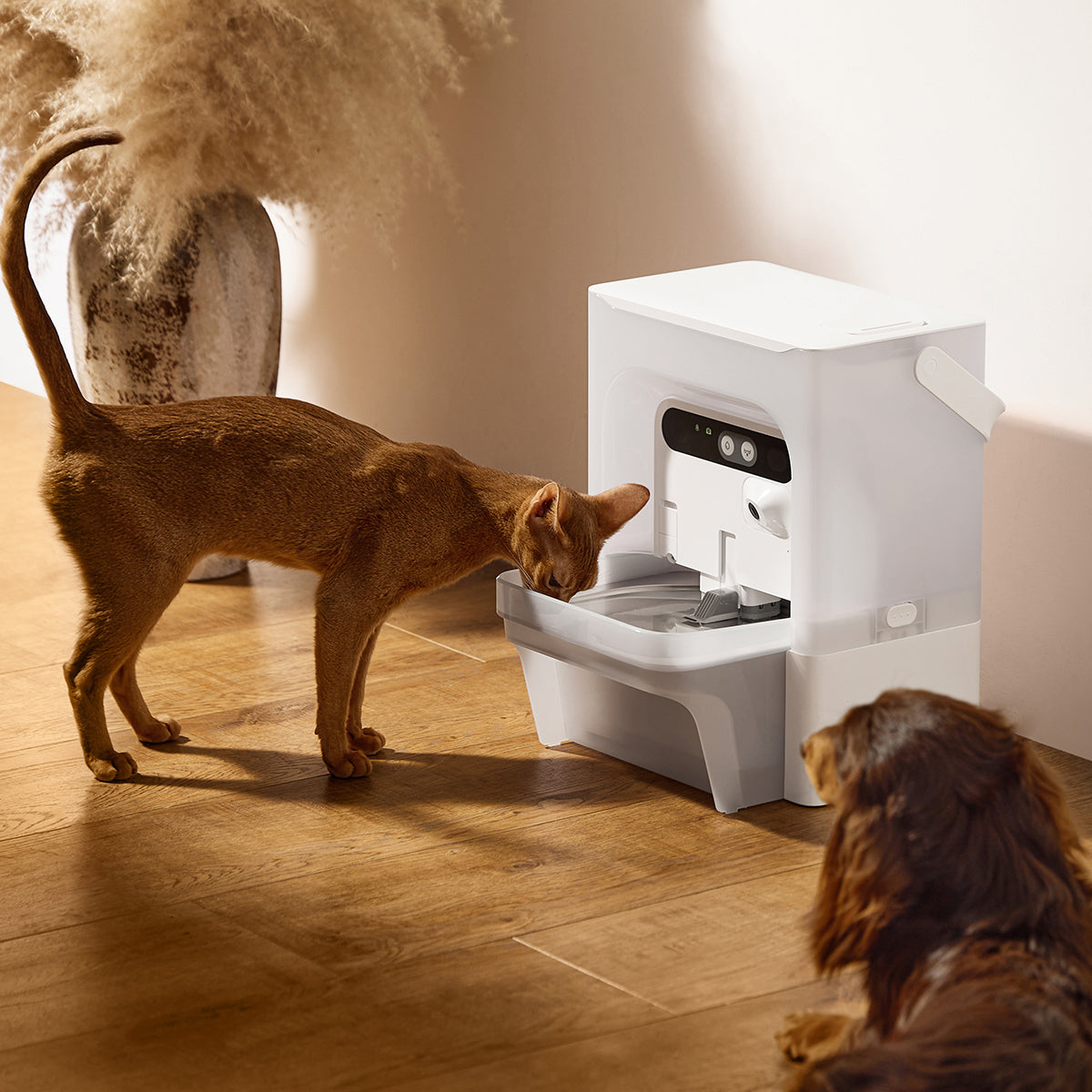
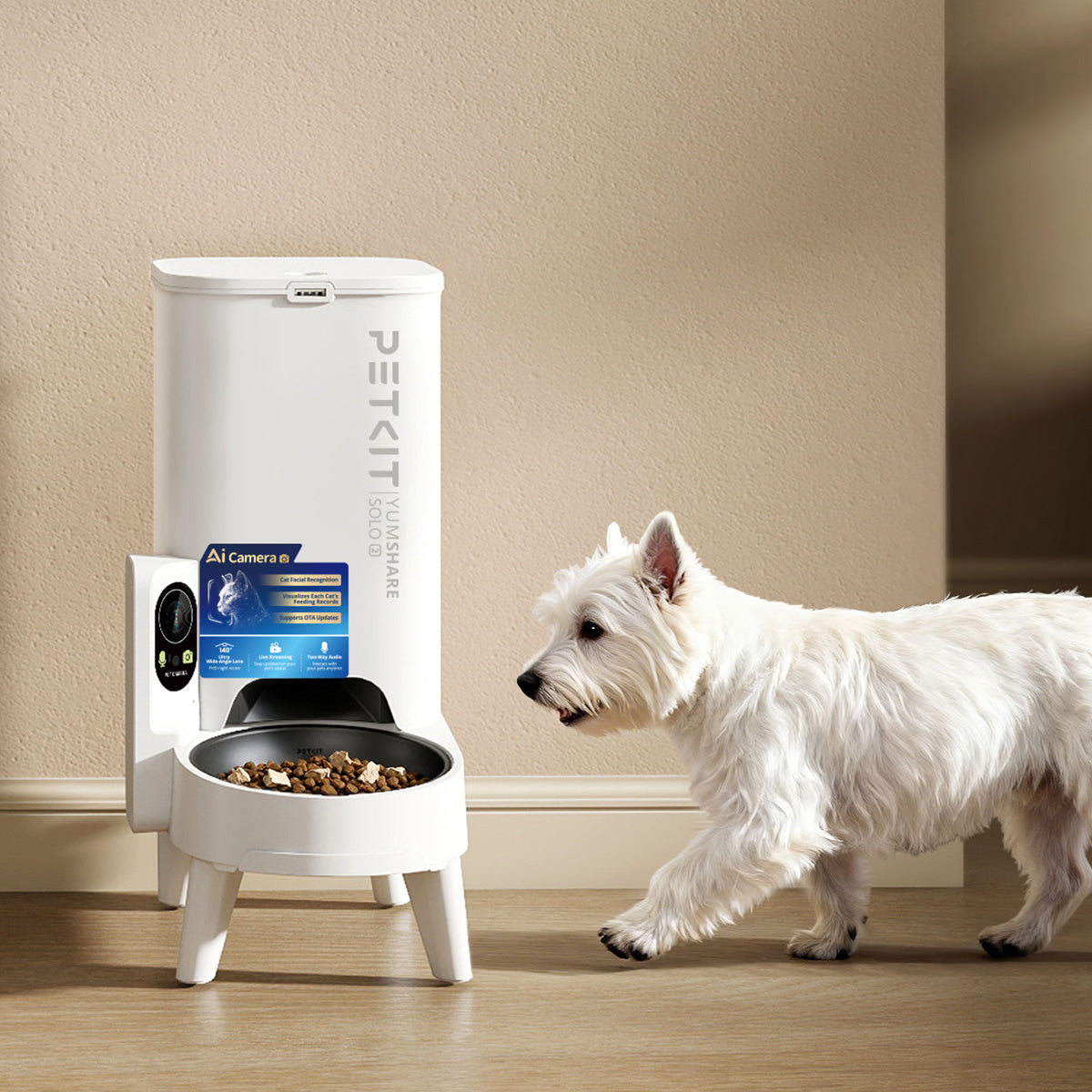
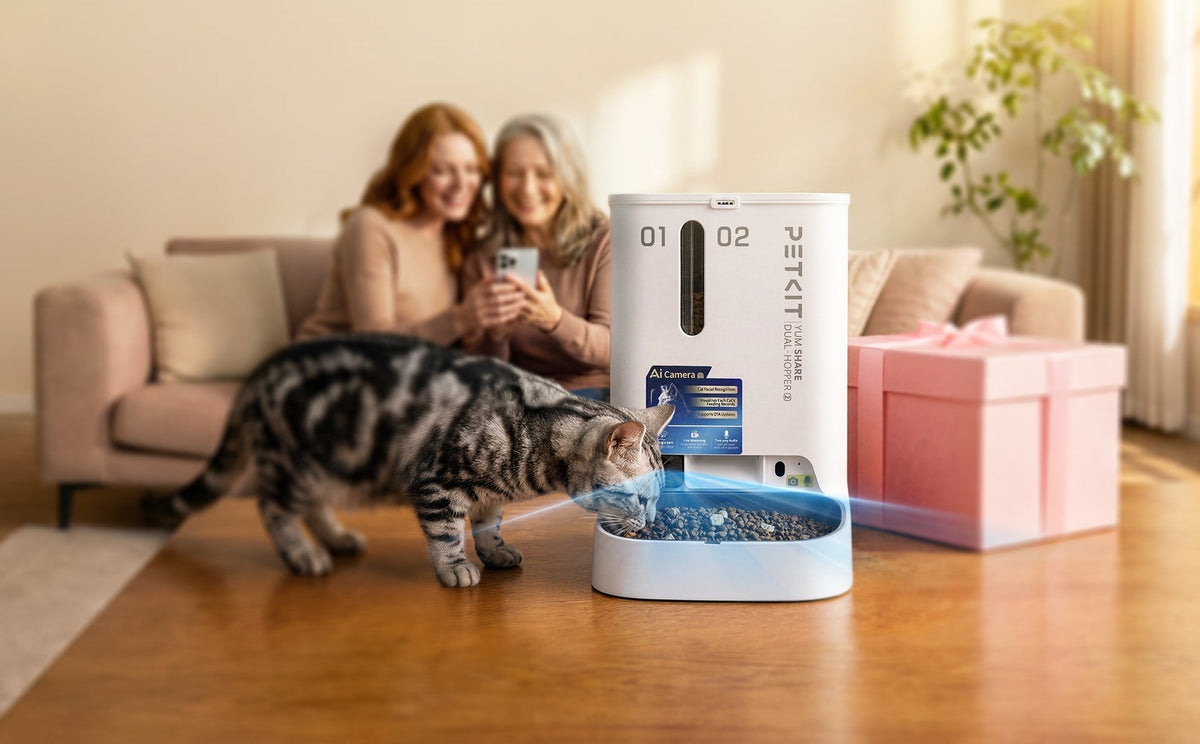
This is really the gap that determines whether scheduled feeding works day to day. Portion control and visibility only help if the schedule stays consistent and someone can actually see how each meal goes, which gets harder the more cats are involved. The YumShare Dual-Hopper 2 Automatic Feeder with Camera is built around exactly that.
Consistent Timing and Portions, Without the Effort
On the scheduling side, its two hoppers can each be set independently, with their own timing and portion size, so the consistency that free feeding lacks becomes automatic rather than something you have to maintain yourself day after day. You can use the second hopper to add freeze-dried, air-dried, or mixed food alongside your cat's regular kibble, giving more balanced nutrition without extra bowls or manual mixing.
Seeing How Each Meal Actually Goes
On the visibility side, its AI camera identifies each cat by face, so even in a home with more than one cat, every visit is logged separately instead of blending into a single shared record the way a communal bowl would. For each visit, the app shows roughly how long that cat stayed at the bowl along with a before-and-after image, giving you a visual reference for whether the meal was finished or largely left behind. Paired with AI-powered surplus food control, the feeder continuously monitors the food level in the bowl, and once it reaches your set range, dispensing automatically pauses, preventing food from sitting too long and reducing the risk of bacterial growth to keep every meal fresh. Over time, this builds a clear picture of each cat's normal eating pattern in the app, which is exactly what a free-feeding bowl can never show you: a way to actually notice when that pattern changes.
Transitioning From Free Feeding to a Schedule
Moving a cat from free feeding to a schedule tends to go more smoothly as a gradual shift rather than an abrupt change. Splitting the same daily amount of food into two or three set mealtimes, at roughly the same times each day, is usually enough to start building the new routine. Some cats ask for food more insistently in the first few days as they adjust, which is normal and typically settles once the new pattern becomes familiar.
It's also common for a cat to eat too quickly when first faced with a full-looking scheduled portion, gulping it down within minutes and then bringing some of it back up shortly after, sometimes called scarf-and-barf. This usually isn't a sign that anything is wrong with the food or the cat, it just means the meal came in faster than their stomach could keep up. Spacing the same daily amount into smaller, more frequent servings, or splitting one meal into two smaller ones an hour or two apart, is typically enough to slow the pace down.
Finding the Right Fit for Your Cat
There's no single answer that applies to every cat and every household, but for most cats, scheduled, portion-controlled feeding offers real advantages that free feeding simply can't match: steadier weight management, clearer insight into appetite, and a routine that adapts more easily when something changes. Free feeding may still suit certain cats who genuinely self-regulate well, and that's a reasonable choice to make deliberately, ideally with input from your veterinarian, rather than one adopted purely out of convenience.
Whichever approach fits your household, the goal is the same: a routine you can actually sustain, and enough visibility into your cat's eating habits that you'd notice if something changed. That combination is what makes a feeding routine genuinely supportive of your cat's long-term health, not just easy in the moment.