

Most cat owners know this moment well: a friend texts that they're stopping by in ten minutes, and before you even think about tidying the living room, your mind jumps straight to the litter box. Or you come home after a long day, and before you even see your cat, you smell them, or rather, you smell what they left behind. Litter box odor is one of those universal challenges of cat ownership. It's not just an unpleasant smell to live with; persistent odor in your home can affect your quality of life, and sometimes it's also a signal worth paying attention to when it comes to your cat's litter habits or health.
To actually solve this problem instead of just tolerating it, it helps to first understand where the smell is really coming from.
Where Litter Box Odor Actually Comes From
Cat urine and feces carry a naturally strong odor. This is simply a matter of feline physiology. Cat urine contains relatively high concentrations of urea, uric acid salts, and certain sulfur compounds, which release sharp, ammonia-like smells as bacteria break them down over time. Compared to dogs, cats tend to produce more concentrated, pungent waste odors, which is part of why many people feel that cats smell worse than dogs. It's not really a fairness issue, it's biology.
But odor isn't the result of a single event; it's a cumulative process. Litter itself can absorb and partially contain odor molecules through physical adsorption, which is why litter offers some initial odor control. However, once waste sits in the box for too long, bacteria multiply and break it down more thoroughly, releasing odor that spreads and penetrates deep into the litter granules, at which point litter alone can no longer keep up. This is exactly why some households using odor-control litter still struggle with smell: the issue often isn't the litter itself, but how quickly the waste gets removed.
The Key Factors That Influence Odor
If you compare different households, you'll notice the odor level in their homes varies a lot, and that difference usually comes down to a few identifiable factors.
Cleaning frequency is the most direct one. The longer waste sits exposed to air, the more time bacteria have to break it down and release ammonia and other irritating compounds. Many people simply can't clean the box the moment their cat uses it, and that time gap is exactly when odor starts to build.
The design of the litter box itself matters too. Open litter boxes offer almost no barrier, so odor spreads freely into the room. Enclosed boxes provide some physical containment, but if airflow inside is poor and waste accumulates without being removed, the box can effectively become a concentration chamber, releasing a stronger burst of smell the moment the lid or door is opened.
Beyond that, the number of cats in the household, their diet, water intake, and the litter's own absorption capacity all play a role in how strong the odor gets. This is why controlling litter box odor was never something a single fix could solve. It requires addressing cleaning efficiency, containment, and active odor neutralization all at once.
The Real Solution: Cut Off Odor at the Source, Don't Just Cover It Up
When odor becomes noticeable, the instinctive reaction for many owners is to spray air freshener, add a bag of activated charcoal, or switch litter brands more often. These methods can offer short-term relief for your nose, but they don't address why the odor is forming in the first place. They simply mask it.
A more effective approach focuses on two things: minimizing how long waste sits exposed in the box, and blocking the pathways through which odor molecules escape into your home. In practice, that means three things need to happen together. First, waste needs to be removed promptly, before bacteria have time to break it down. Second, once removed, waste needs to be sealed away quickly so it no longer shares air with the rest of the box. Third, any lingering odor molecules that do escape need to be actively broken down or neutralized, not just passively absorbed by the litter.
Once you see the problem this way, it becomes clear why manual scooping and standard litter alone often fall short. It's not a matter of not trying hard enough. Manual cleaning inherently has a delay built in, and ordinary litter simply doesn't have the ability to actively neutralize odor on its own.
When Daily Cleaning Can't Keep Up, Automation Fills the Gap
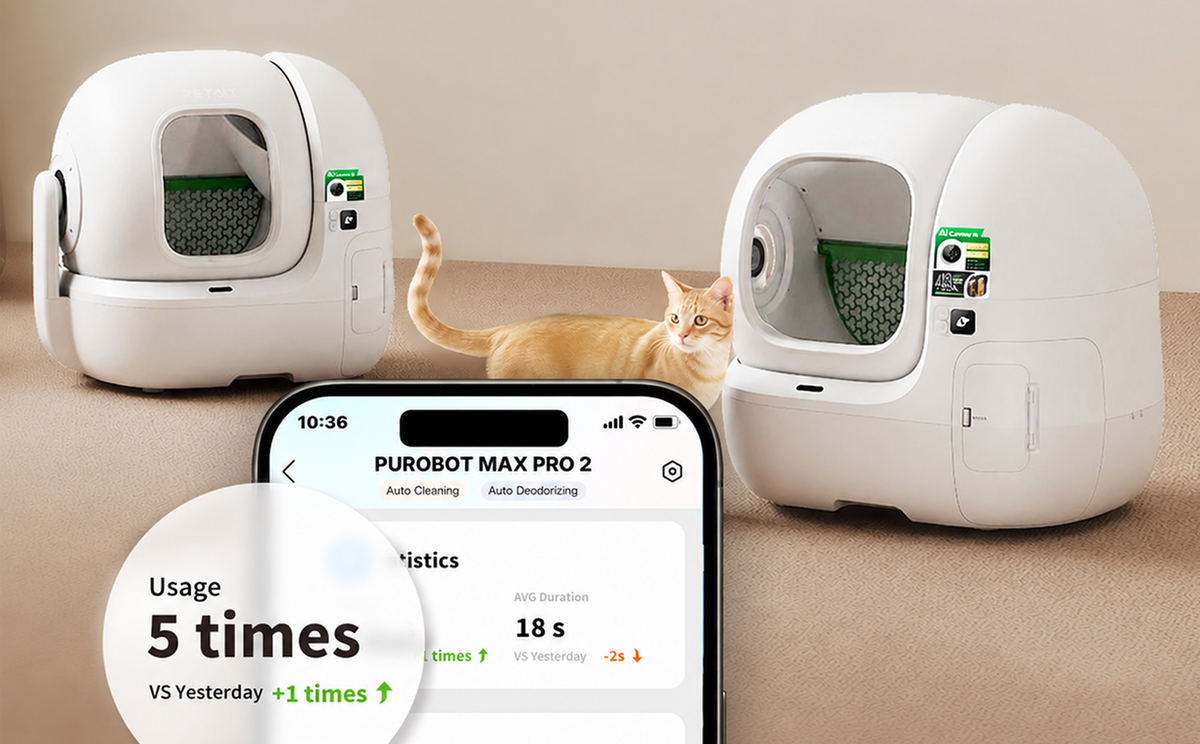
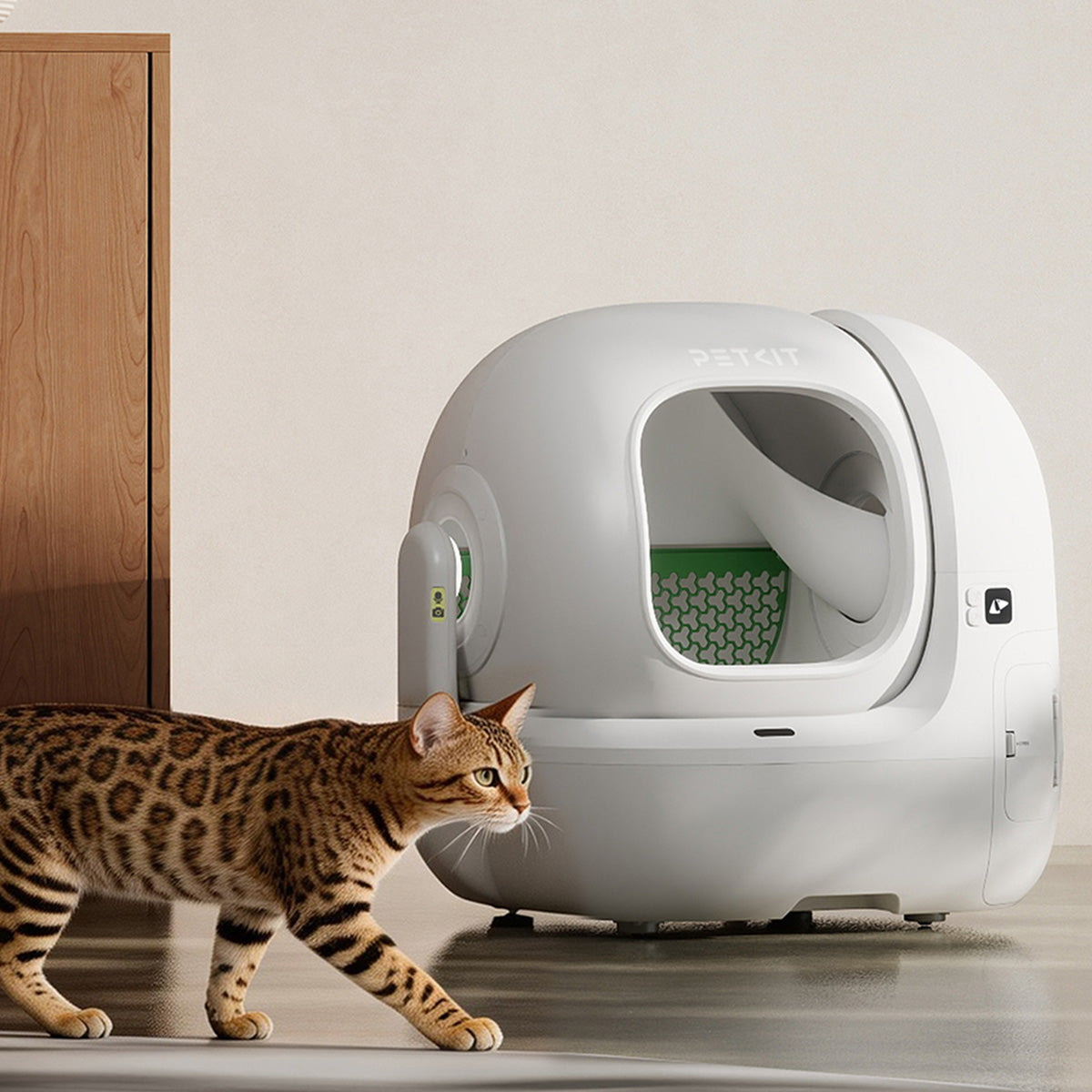
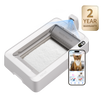
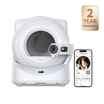
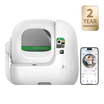
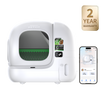
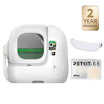
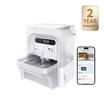
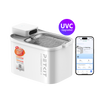
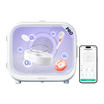
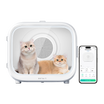
This is the exact problem PETKIT set out to solve when designing the Purobot Max Pro 2 self-cleaning litter box: reducing odor buildup at its source, rather than layering on another scent to cover it up. Its approach maps directly onto the three factors above.
Cleaning the Moment Your Cat Leaves
Timeliness is the first piece. After your cat uses the box, the Purobot Max Pro 2 automatically scoops and cleans, so waste doesn't have to wait until you're home from work to be dealt with.
- Through the PETKIT app, you can set cleaning to start immediately after your cat leaves, or add a short delay, like 2 minutes, giving more timid cats a buffer without letting exposure time drag on
- Either setting keeps the overall window far shorter than any manual routine could realistically manage
A Cleaner Result, Not Just a Faster One
Getting waste out quickly only helps if the cleaning itself is actually thorough, and if it keeps up as usage increases.
- Cleaned waste goes into a separate, sealed 8L waste compartment, and a patented drawstring, touch-free bagging design lets you seal it shut with a single pull, so waste barely shares air with the rest of the box, and for single-cat households, the compartment can go up to 17 days between manual emptying
- In multi-cat households, the box gets used more often, which means more cleaning cycles are needed to keep pace. The Purobot Max Pro 2's AI camera and weight sensors identify individual cats through facial recognition and log each one's visits separately, so every visit gets cleaned promptly, even in a household with several cats sharing the same box
- The litter itself plays a role here too. A litter that clumps tightly and completely, rather than crumbling or leaving residue, means less waste sticks to the drum wall with each cleaning cycle, which matters more the more frequently the box is used
Neutralizing Odor Instead of Masking It
Even with fast cleaning and thorough removal, some odor molecules escape before they're dealt with, which is where active neutralization comes in.
- A multi-layer odor control system handles this from multiple angles: continuous fragrance diffusion N60 inside the cylinder, targeted ammonia neutralization N50 inside the sealed waste bin, and the sealed bin itself preventing odor from escaping into the room
- Because this runs continuously rather than depending on you remembering to check, it holds up even as usage volume climbs in busier, multi-cat households
Choosing the Litter That Matches the Job
The Purobot Max Pro 2 works with clumping cat litter, but pairing it with the right one addresses a different piece of the odor puzzle depending on your household:
- 5-in-1 Mixed Cat Litter is the general-purpose option: a tofu and bentonite blend with three odor-controlling ingredients, fast 3-second clumping, and a fully flushable, natural formula that makes disposal simple without adding to the trash
- Clump+ Tofu Mixed Cat Litter steps up the odor-control side specifically, adding zeolite and diatomite on top of activated carbon and deodorant particles, which makes it better suited to multi-cat households where waste volume, and therefore odor load, is naturally higher
- Urine Monitor Cat Litter adds a different kind of value on top of odor control: pH-activated particles that change color when they contact abnormal urine, turning a routine litter box visit into a passive check on urinary health, and pairing naturally with the Purobot Max Pro 2's facial recognition to flag which specific cat's clump changed color in a multi-cat home
It's also worth noting that the same AI camera system does more than support odor control and litter monitoring. It can pick up on behavioral signals during litter box visits, such as unusually long urination time, distress yowling, or abnormal stool consistency, and compile this into a health log for you to reference. This is often why owners choose an automatic litter box in the first place, not just for the convenience, but for the added peace of mind that comes from having a system that quietly keeps an eye on their cat's health alongside the daily cleanup.
At the end of the day, litter box odor isn't something you simply have to live with. It reflects how efficiently waste is being managed in your home, and understanding where the odor actually comes from is the first step toward solving it for good, rather than just masking it one spray at a time.
Final Thoughts
Controlling litter box odor ultimately comes down to timing, containment, and active neutralization working together, not any single product or habit on its own. Once you understand where the smell actually comes from and how quickly it builds, it becomes much easier to see why some solutions offer real, lasting relief while others only mask the problem for a few hours. For most households, closing the gap between "my cat used the litter box" and "the waste is cleaned, sealed, and deodorized" is the single most effective thing you can do. Whether that gap is closed through a more consistent cleaning routine or with the help of a device like the Purobot Max Pro 2, the goal stays the same: a home that smells clean and a litter box routine that no longer feels like something to apologize for when guests come over.